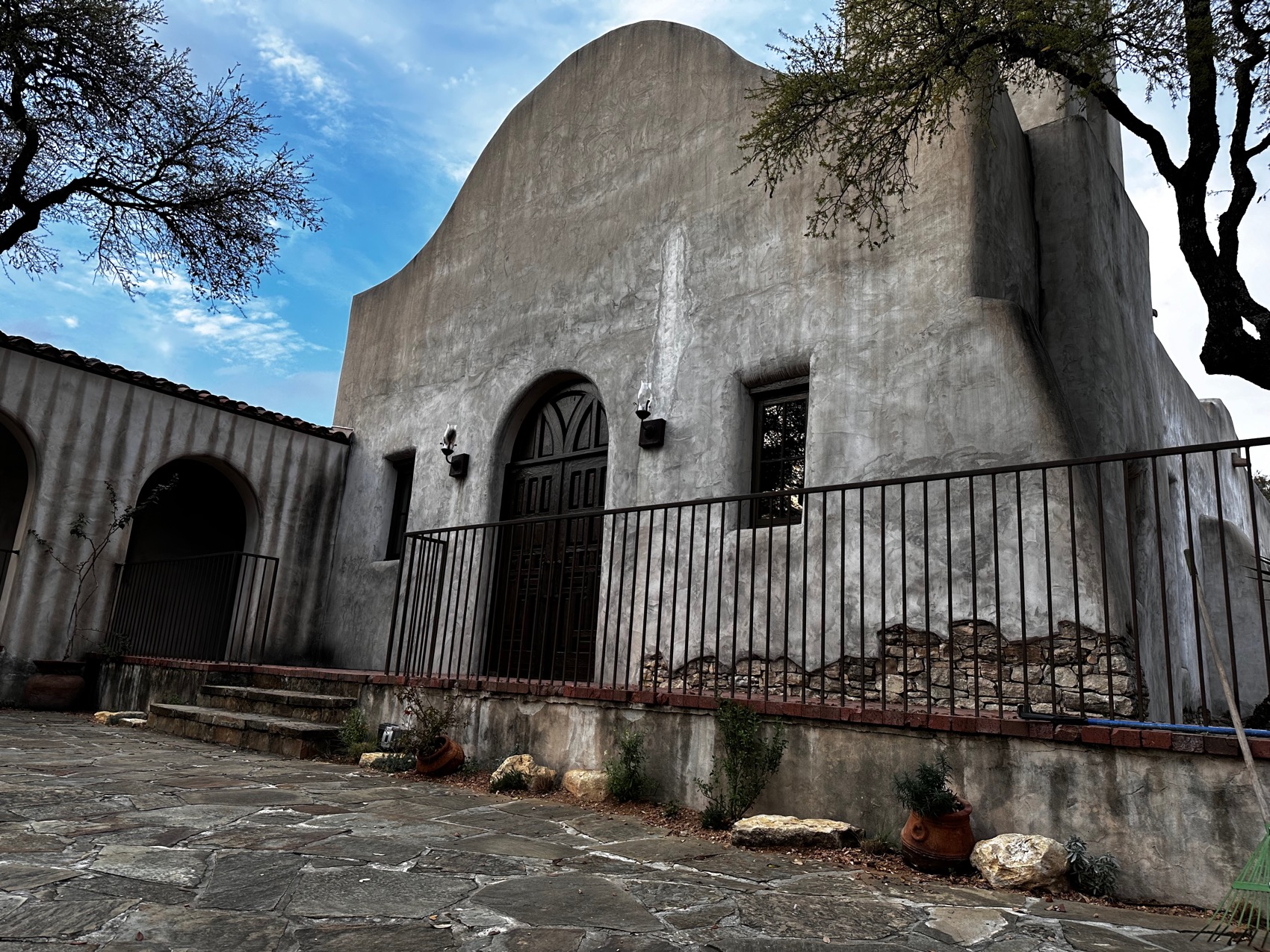
The atrio.
Begin with the word, because the word carries the whole idea. An atrio is the walled forecourt of a mission — the open ground a person crosses on the way in. A huerta is a garden you eat from. Put them together and you have the thing the Spanish missions of this region actually ran on: not an ornamental bed for visitors to admire, but a working orchard-and-kitchen garden, held inside the courtyard, feeding the people who lived around it. The architecture here is mission-styled rather than three hundred years old — I want to be honest about that — but the tradition it borrows from is real, and it was worth bringing back.
Most of what passes for landscaping treats a courtyard as a stage set: something to look at, watered into submission, edible by nothing. We did the opposite. We read the forecourt the way the old huertanos would have — as ground that should give something back — and planted it to be looked at and eaten from, by people and by everything else that has to make a living out here.
The hard ground.
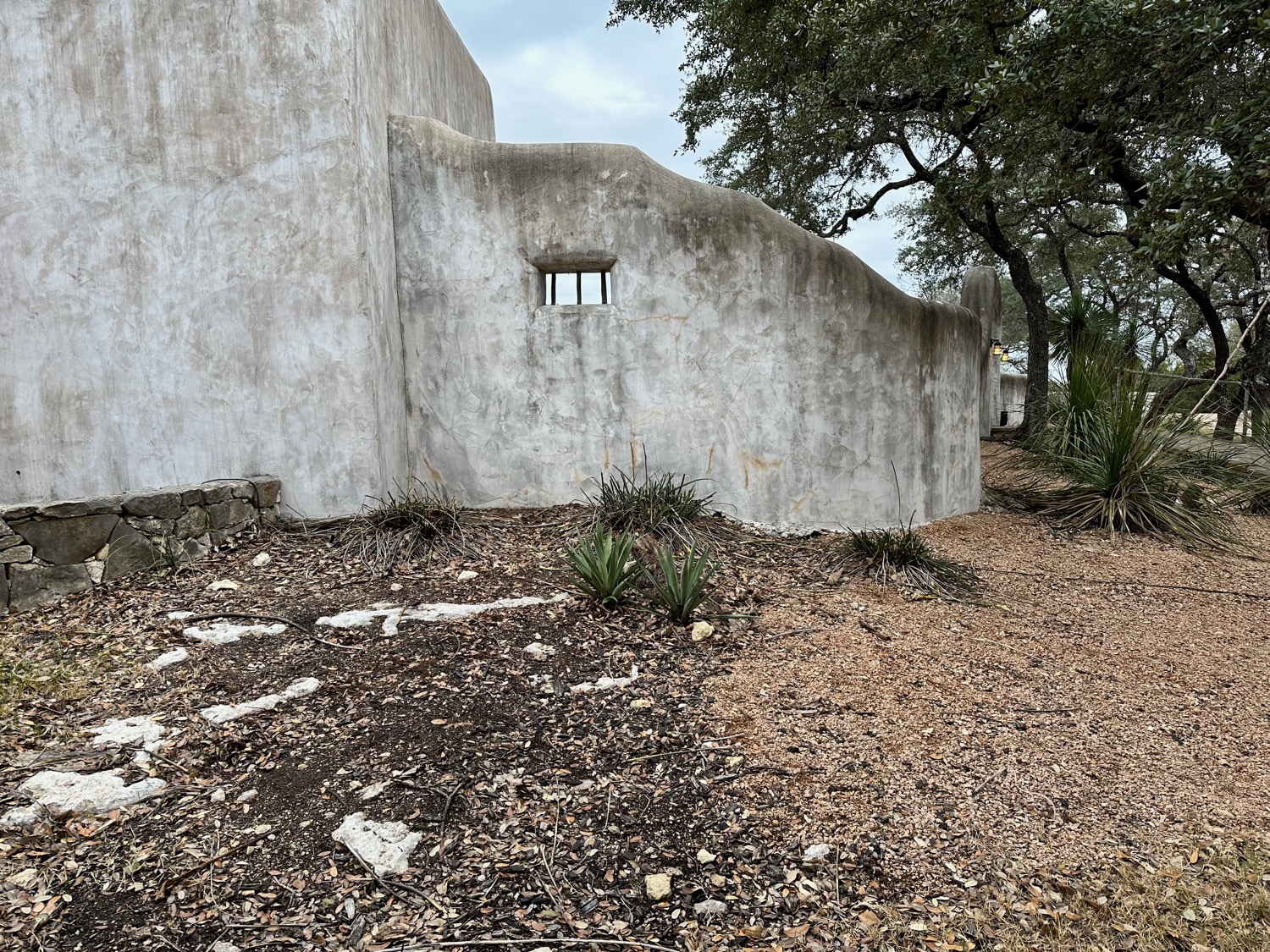
Anyone who has put a shovel in Hill Country ground knows the joke isn't funny. It is caliche — pale, compacted limestone soil that the rest of the country would call rock and that we are expected to call dirt. The conventional answer is to truck the native ground away and replace it with something softer and shipped. We don't, because the plants that belong here never asked for soft. They asked for sun, drainage, and to be left alone, and the caliche gives all three. The work at the start is not amendment. It is reading the ground honestly and choosing the things that already want to live in it.
Laying the beds.
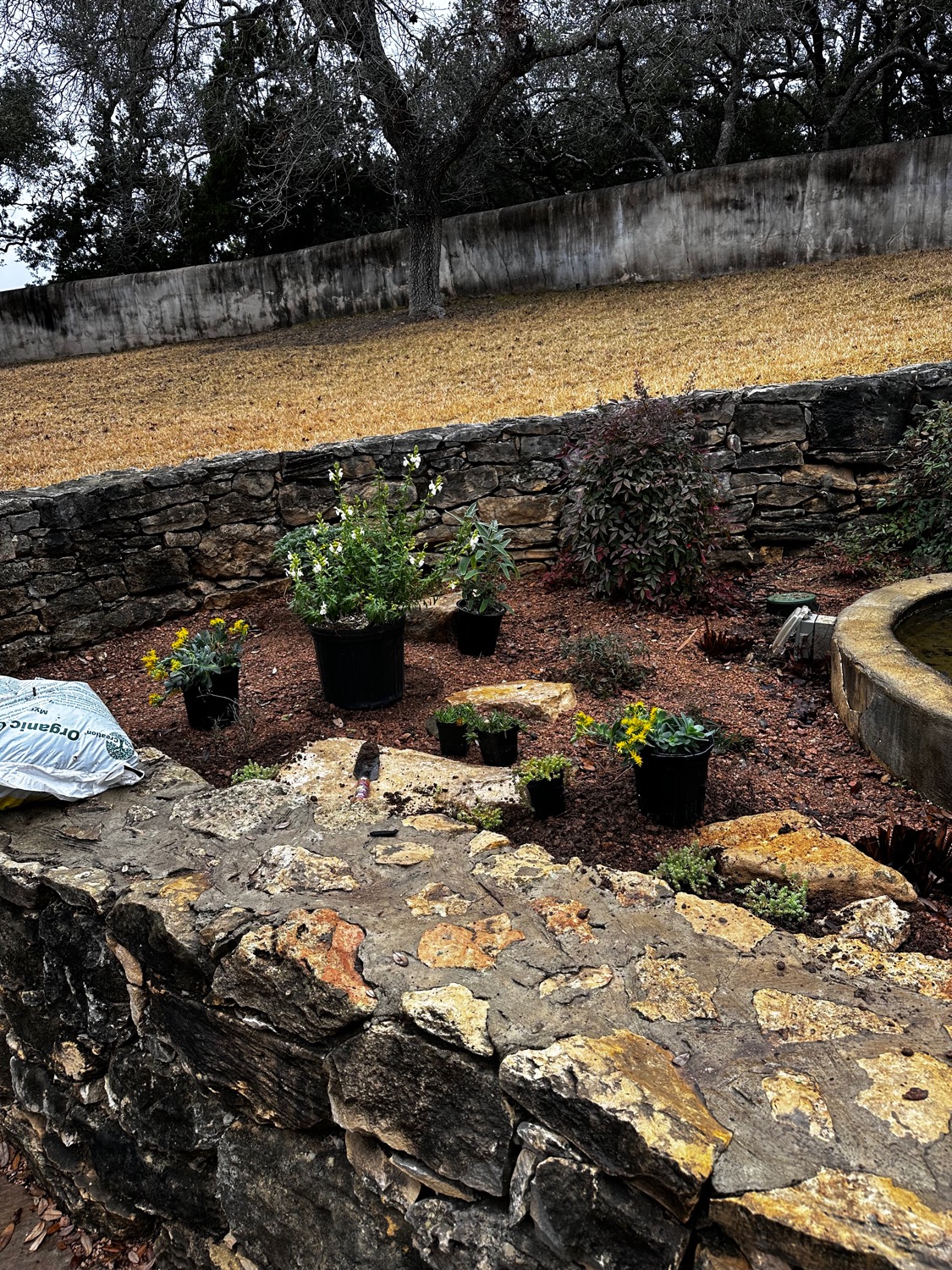
The beds went in stone-edged and low, the way terraces have always been built where water is scarce and gravity is free — a rock lip to hold the soil and slow the runoff, mulch to keep the ground cool, and room left between for a person to kneel and work. This is the part people forget about the mission gardens: they were communal by design. The layout assumes more than one set of hands. We built it the same way, on purpose — a garden you tend together rather than one you hire someone to mow.
The water.
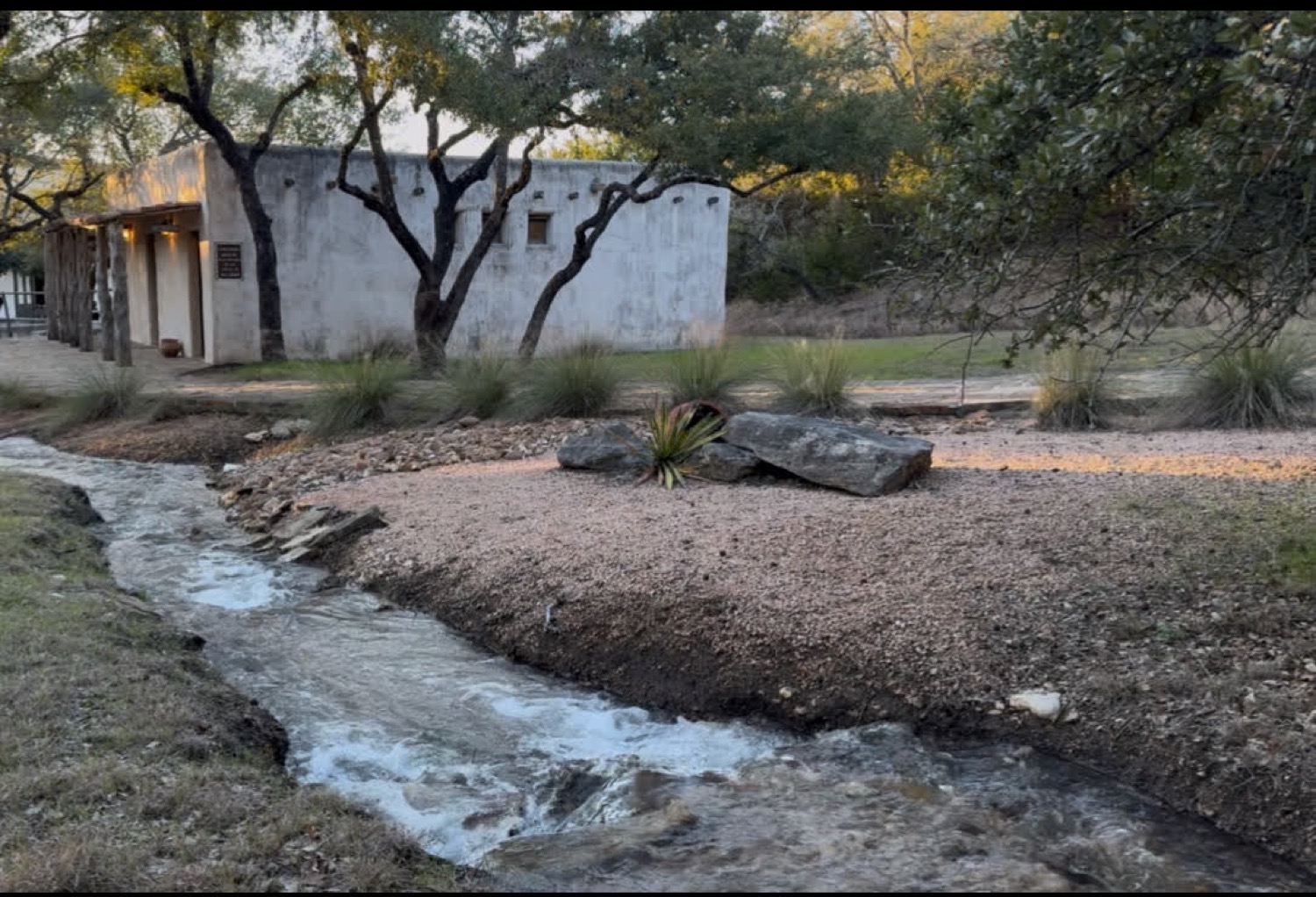
No mission garden ran without a channel to carry water through it, and ours is no exception. My people moved water this way for three centuries on the acequias that still run, quietly, beneath this region — slow it down, spread it out, let the ground drink before it leaves. It is the same logic that drives everything Noon builds, from a curbside bioswale to a forecourt orchard: water is a commons to be guided, not a nuisance to be flushed. Give it a path through the garden and it stops being something you pay to remove and starts being the reason the garden exists.
The palette.
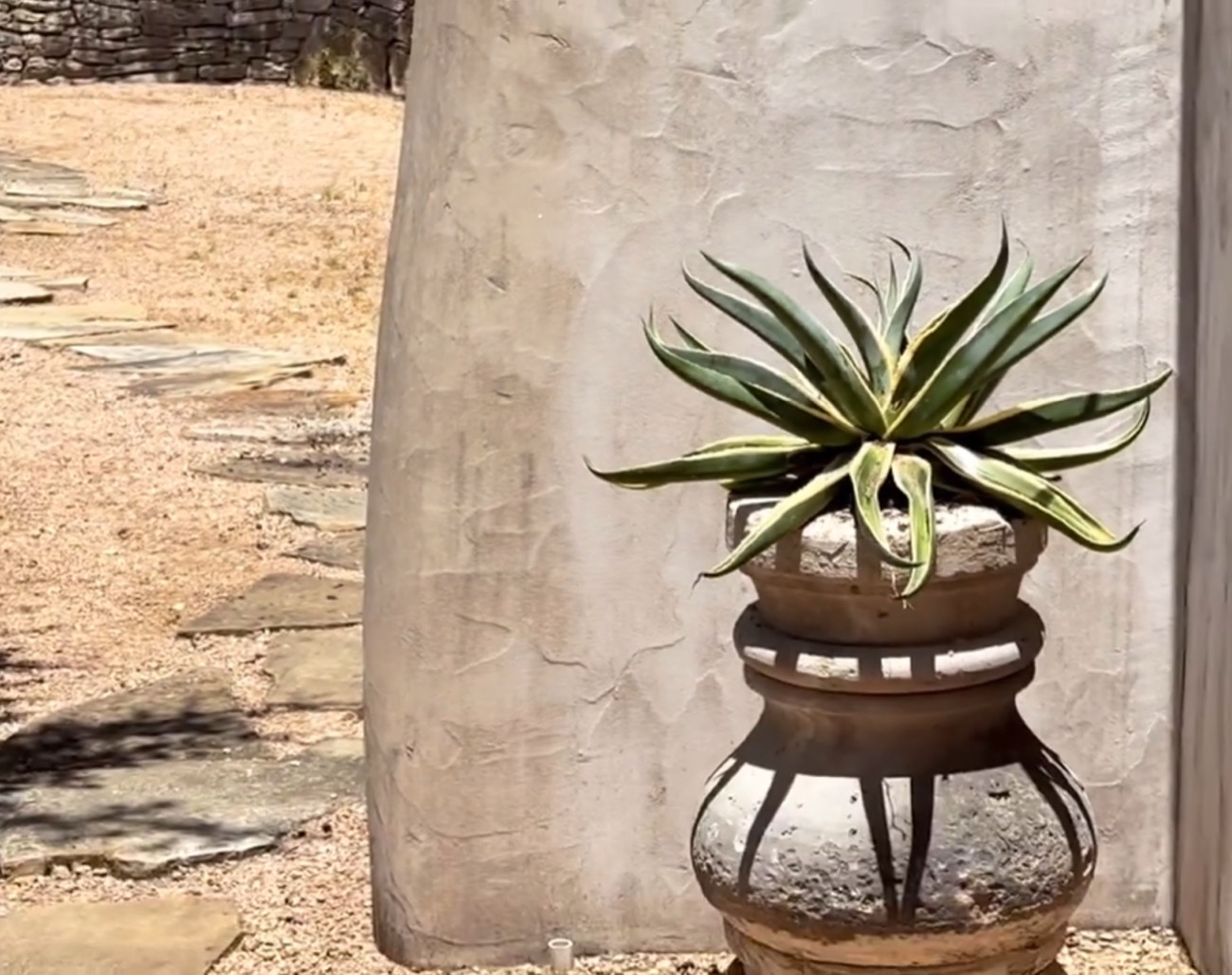
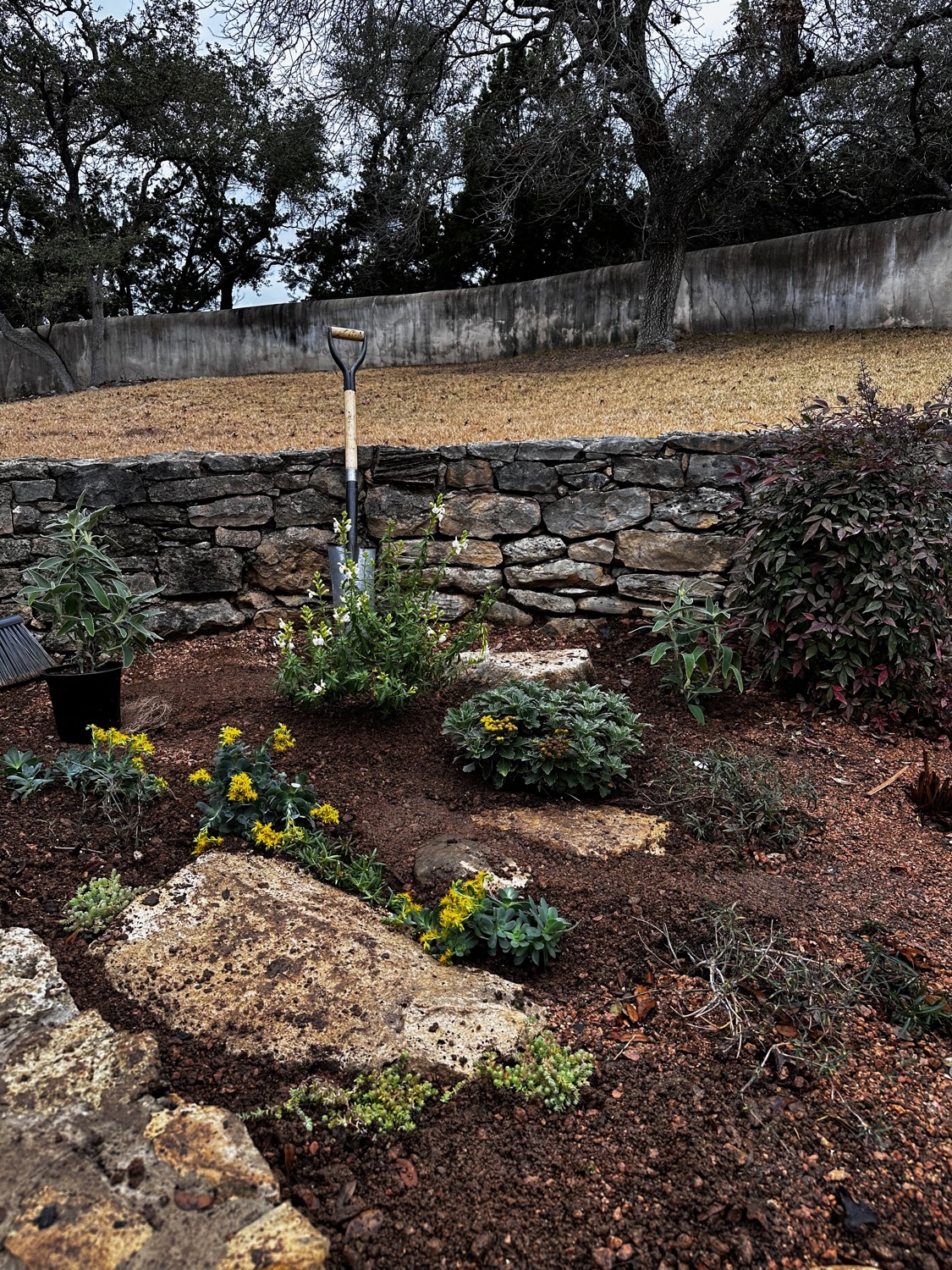
The planting is entirely native and entirely organic — no synthetic feed, no synthetic defense, nothing the ground and the bugs can't read. The full list is long enough that it's easier to point you at the Field Guide, where the palette is documented plant by plant: agarita, cenizo, mountain laurel, gulf muhly, inland sea oats, Turk's cap, esperanza, and the rest of the Hill Country company. Threaded through the ornamentals is an indigenous-culinary line — Texas persimmon, agarita, prickly pear, and their kin — the foods this land actually offered the people who lived on it before a grocery store decided what a Texan was allowed to eat. That is the quiet argument of the garden: that the most beautiful plant and the most useful one are frequently the same plant, and that we only stopped noticing.
The homage.
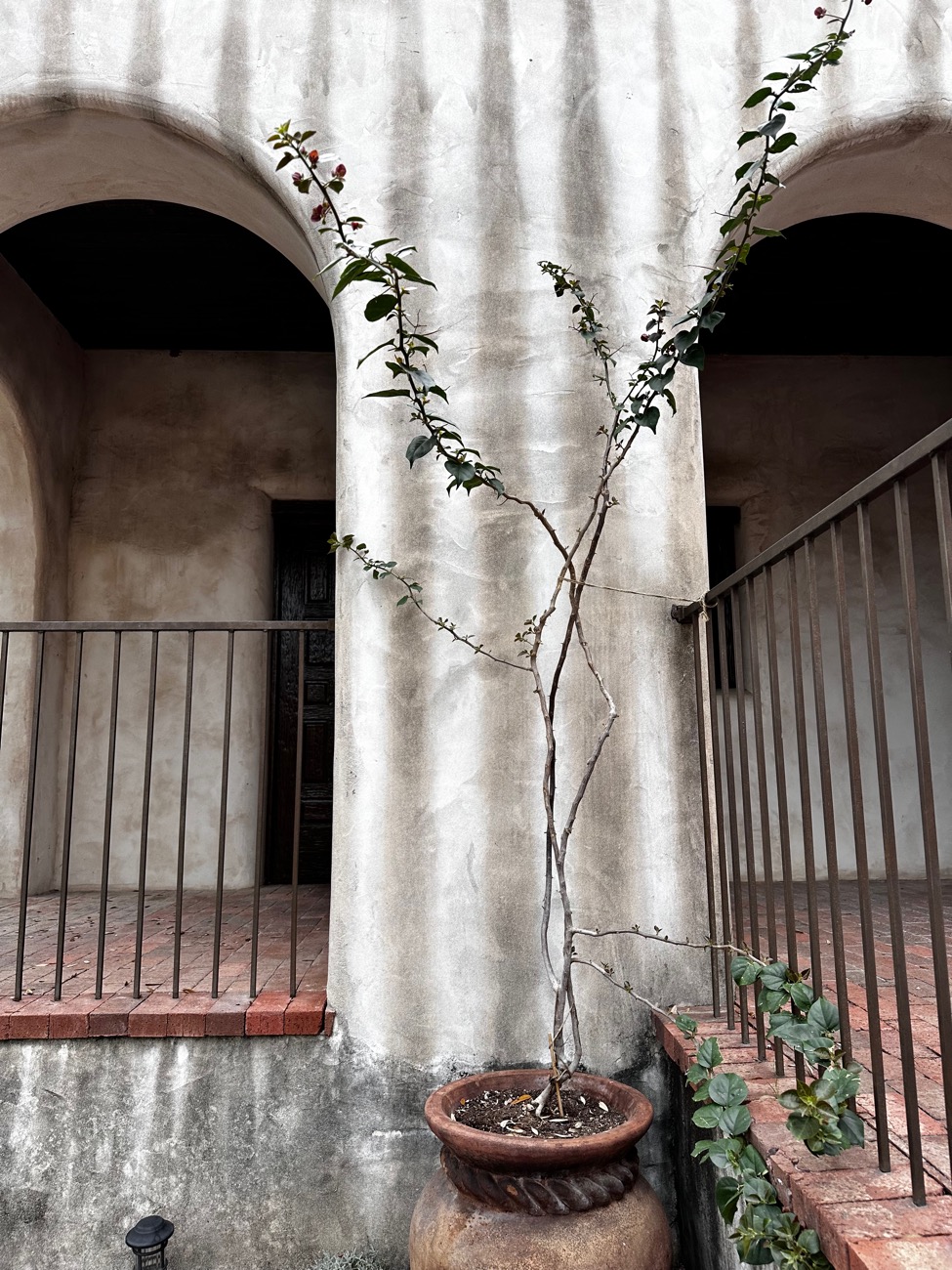
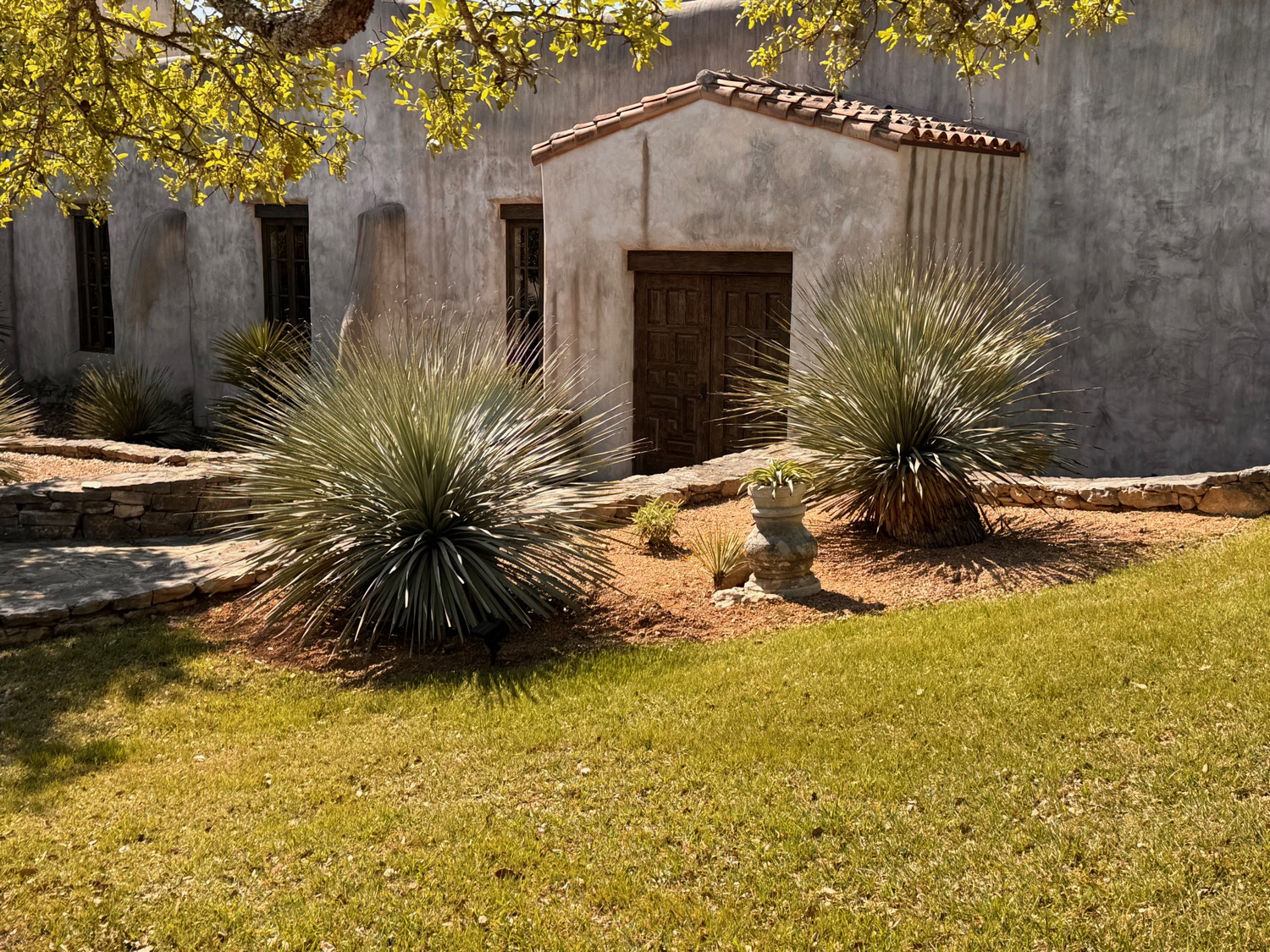
The building gives the garden its grammar: arch, colonnade, whitewashed wall, the deep shade of a portico in a country that punishes you for standing in the sun. We planted to that grammar — a young tree trained against the stucco where the wall could feed it warmth, sotol and agave set where their architecture answers the building's. None of this is invented. It is the courtyard tradition of this region, read carefully and put back into service, which is most of what good work out here actually is: not the new idea, but the old one, remembered on purpose.
Held in common.
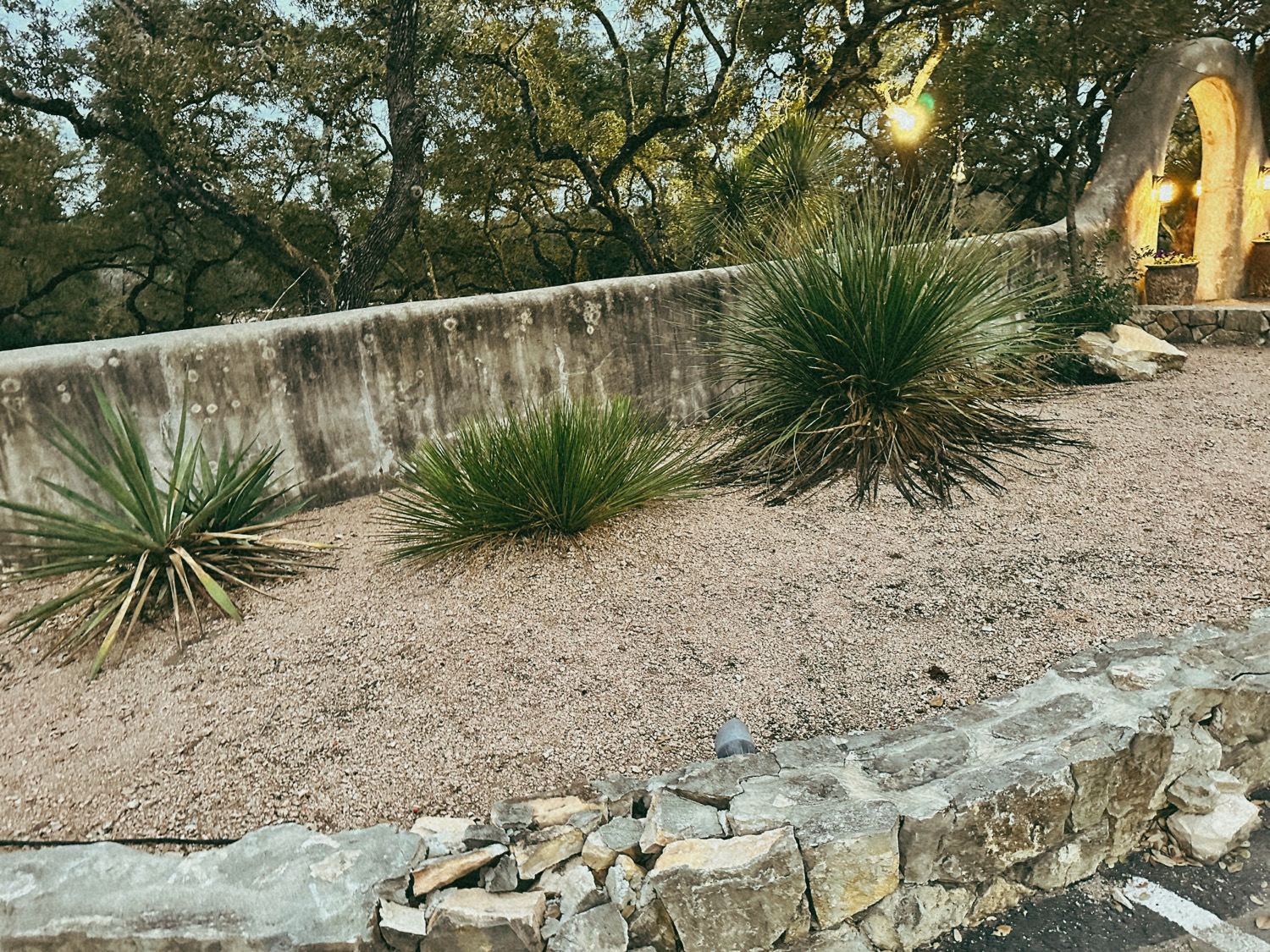
There is a phrase I keep coming back to — indigenizar el plato, to indigenize the plate — and it is the whole point of a garden like this one. The mission huerta was never private. It was the model of a community growing its own food, in its own ground, with the plants that belonged there, and sharing the result. A forecourt orchard in the Hill Country is that exact idea, sized to a single courtyard: make the most public ground on a property the most generous one. Plant it native, keep it organic, grow some of it to eat, and let it belong to everyone who walks across it. That is not nostalgia. It is the oldest and most durable infrastructure there is — and it still works.
- Tradition
- The huerta de atrio — the mission forecourt orchard-and-kitchen garden, grown in common.
- Approach
- Native · totally organic · indigenous-culinary · communal by design.
- Palette
- The full Hill Country native palette — documented in the Field Guide. Edible line: Texas persimmon, agarita, prickly pear, and others.
- Setting
- A mission-styled venue in the Texas Hill Country. (Homage to the tradition — not a historic colonial site.)
- Status
- Planted and growing in. Documented as it matures.