The form.
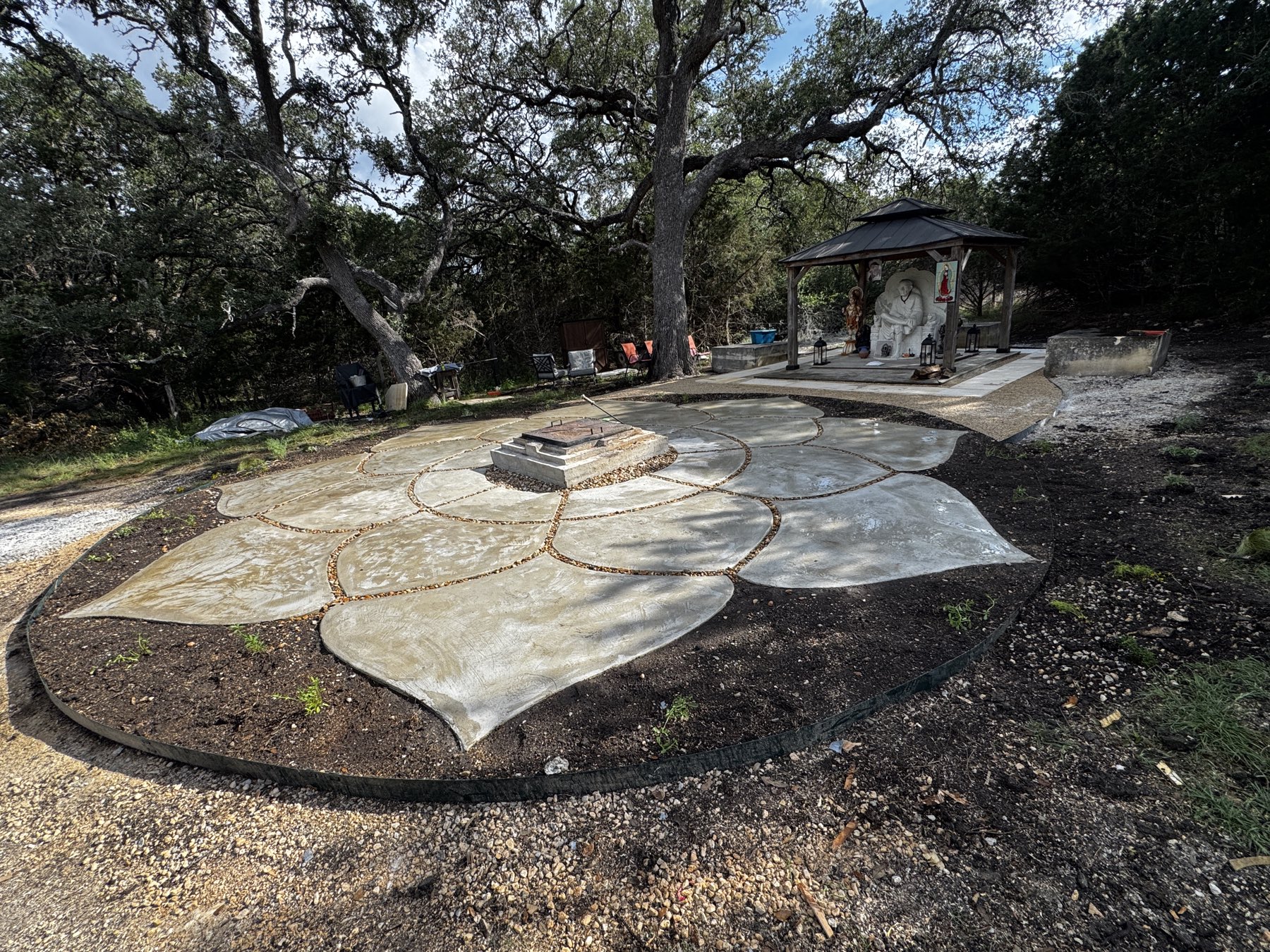
Most landscapes are arrangements. This one is an argument. The lotus is the oldest symbol of emergence — the flower that rises clean out of the muck — and we set out to build it at courtyard scale, in the most permanent and least forgiving material we know: eight petals, radial and exact, in concrete that gives you exactly one try. A lotus you can walk into and sit down inside.
And why a lotus, exactly? It was commissioned as the platform for a Shirdi Sai Baba shrine — the saint whom Hindus and Muslims both hold as their own, who taught that every faith is one road to a single door: Sabka Malik Ek, one God governs all. Baba told those who came to him to be a lotus, unfolding its petals when the sun rises, unaffected by the slush. The patrons had already made that ground sacred, deliberate, and multi-faith; they asked us only for a floor worthy of it. The eight petals were never our idea. We were grateful to lay the stone for something they had already dreamed.
The drawing.
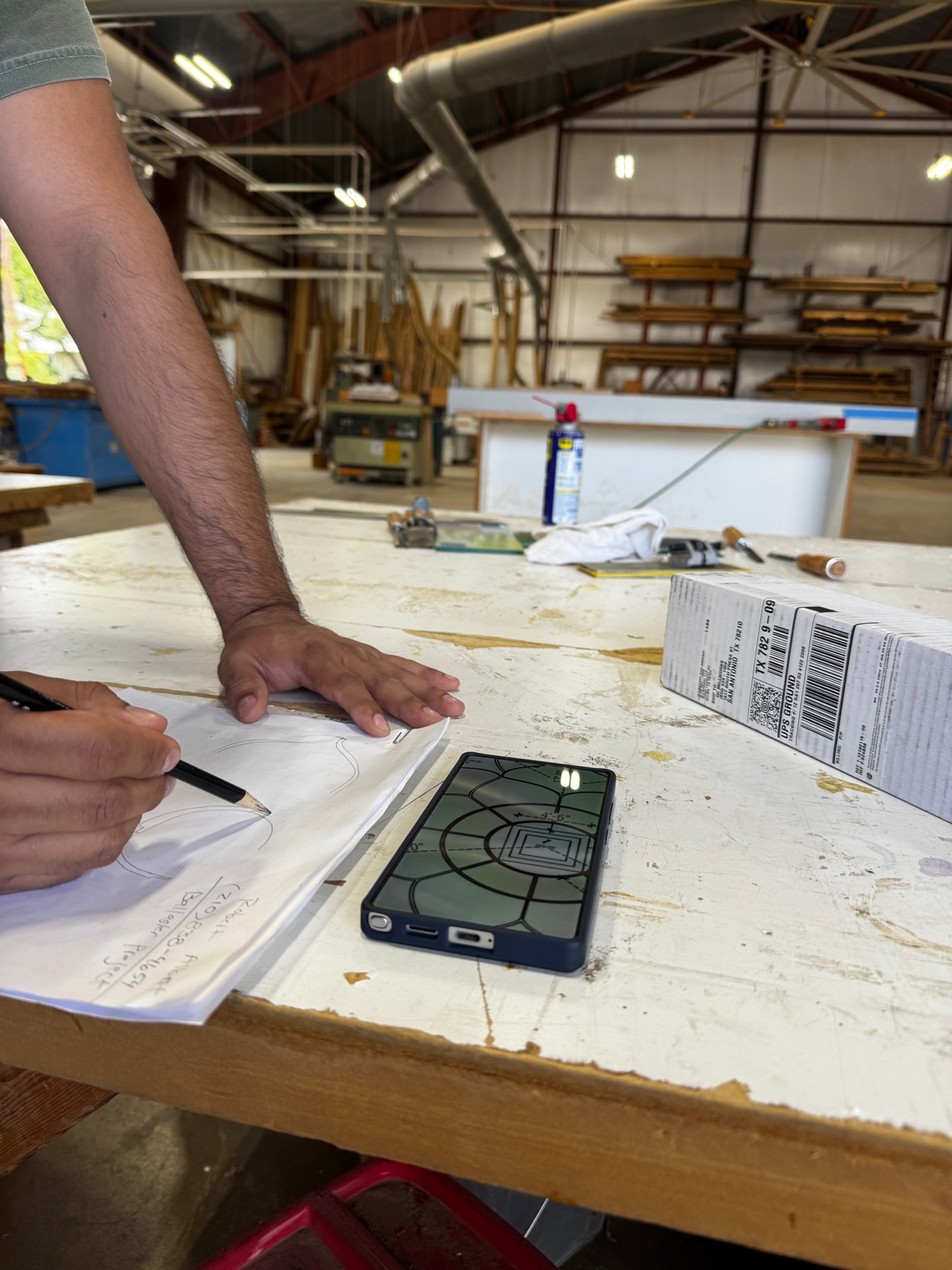
It started on paper and a phone in a shop that smelled of sawdust — the petal radii worked out by eye and by number until every curve was right. Drawing the mark was the easy part. Nobody had written down how to make it survive contact with concrete, because — as far as we can find — nobody had built one.
The forms.
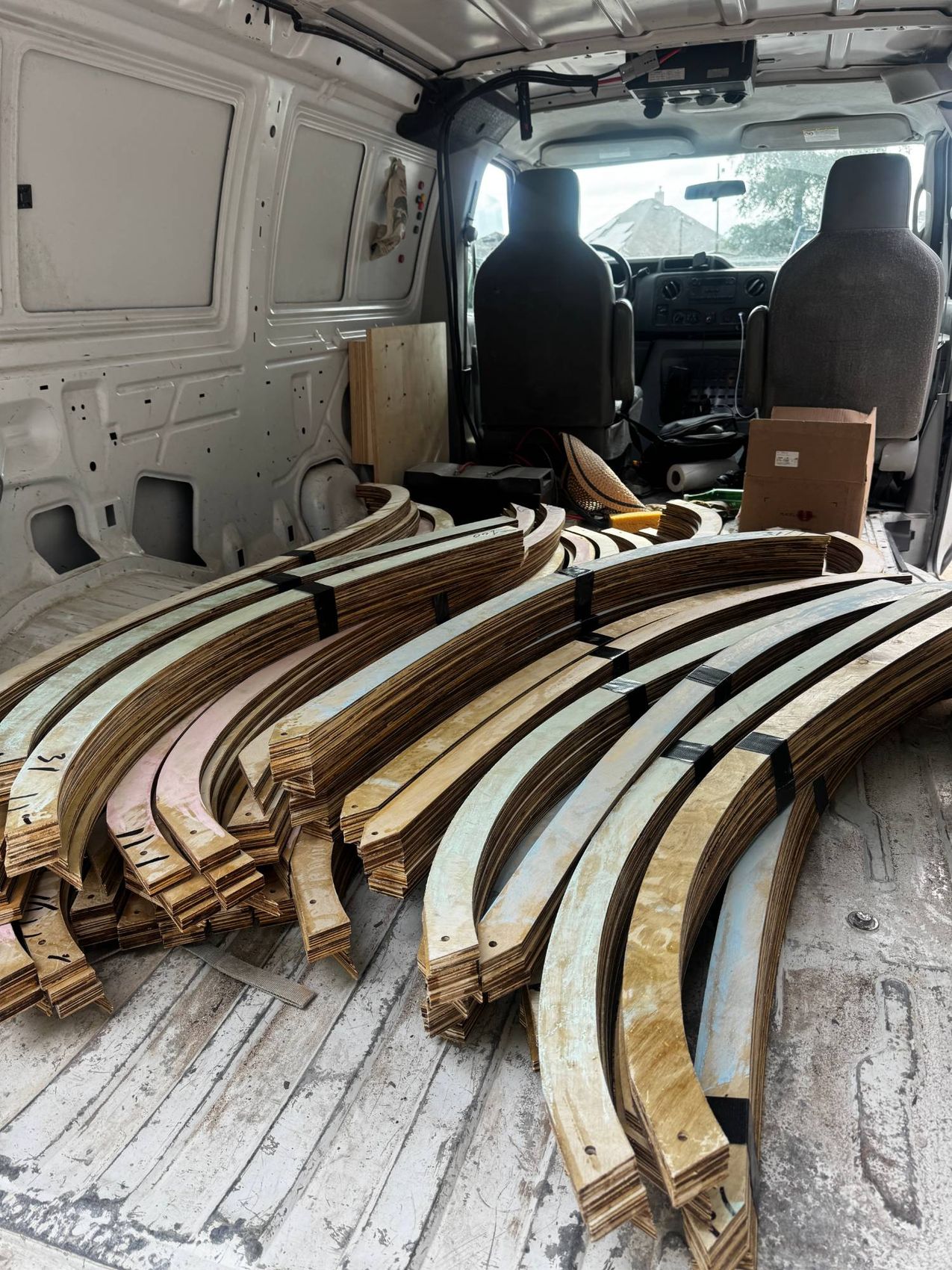
The petals were cut from birch — laminated, layered, sealed — eight forms, every curve a jig that exists exactly once, built to make a shape that has to be perfect the first time it is filled. Concrete does not accept a second draft. We sealed the wood so the cured petals would let go clean, numbered every piece, and stacked the whole set in the van to carry out to the oaks.
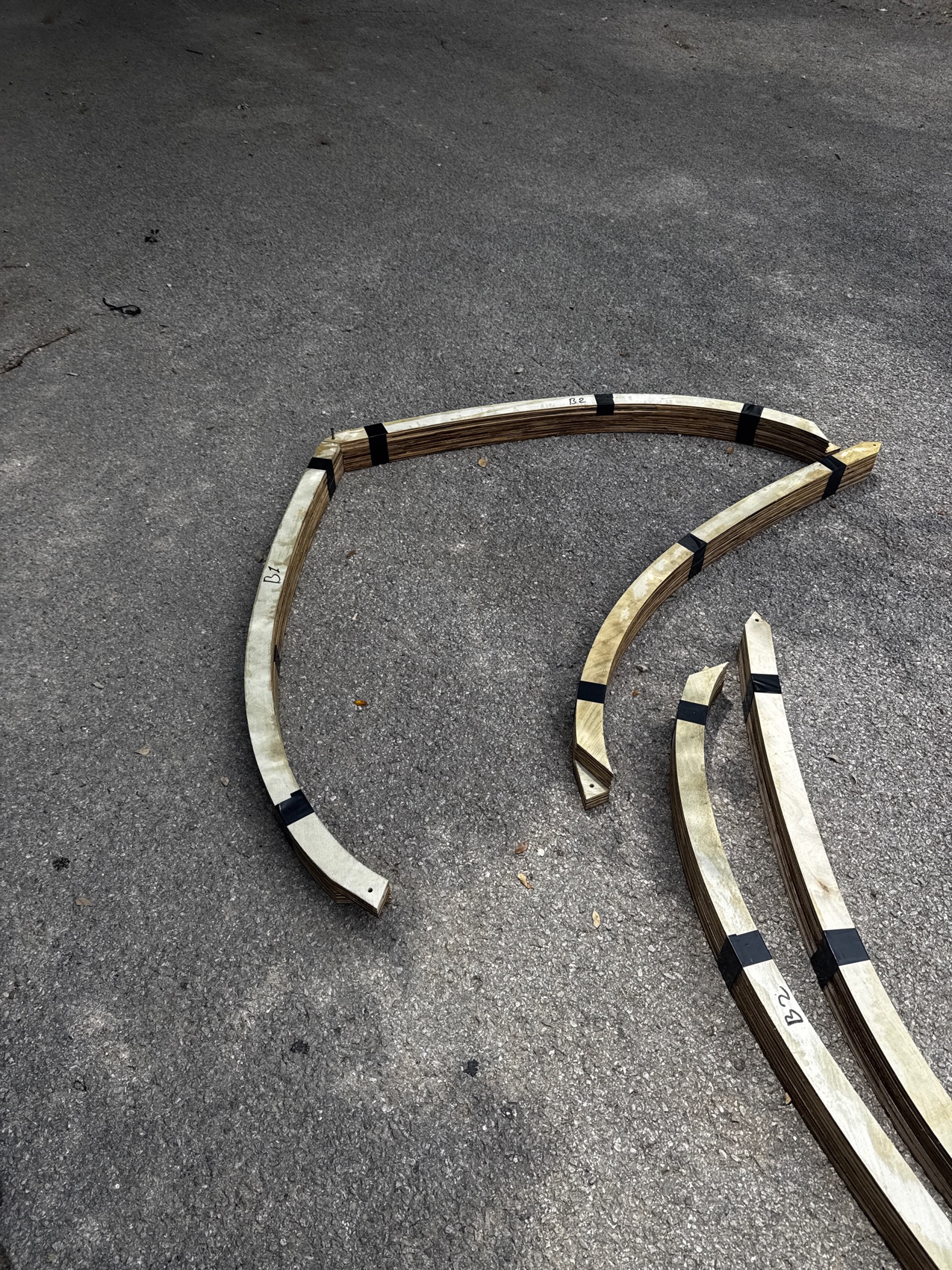
Each petal wanted a family of ribs, not one mold — laminated plies bent to the drawing, faces sealed so the cured concrete would let go clean, every rib numbered in marker because pour morning leaves no time to wonder which curve is which. Strapped in bundles, the set filled the van to the seat-backs: a lotus in kit form, riding out to the oaks.
The pour.
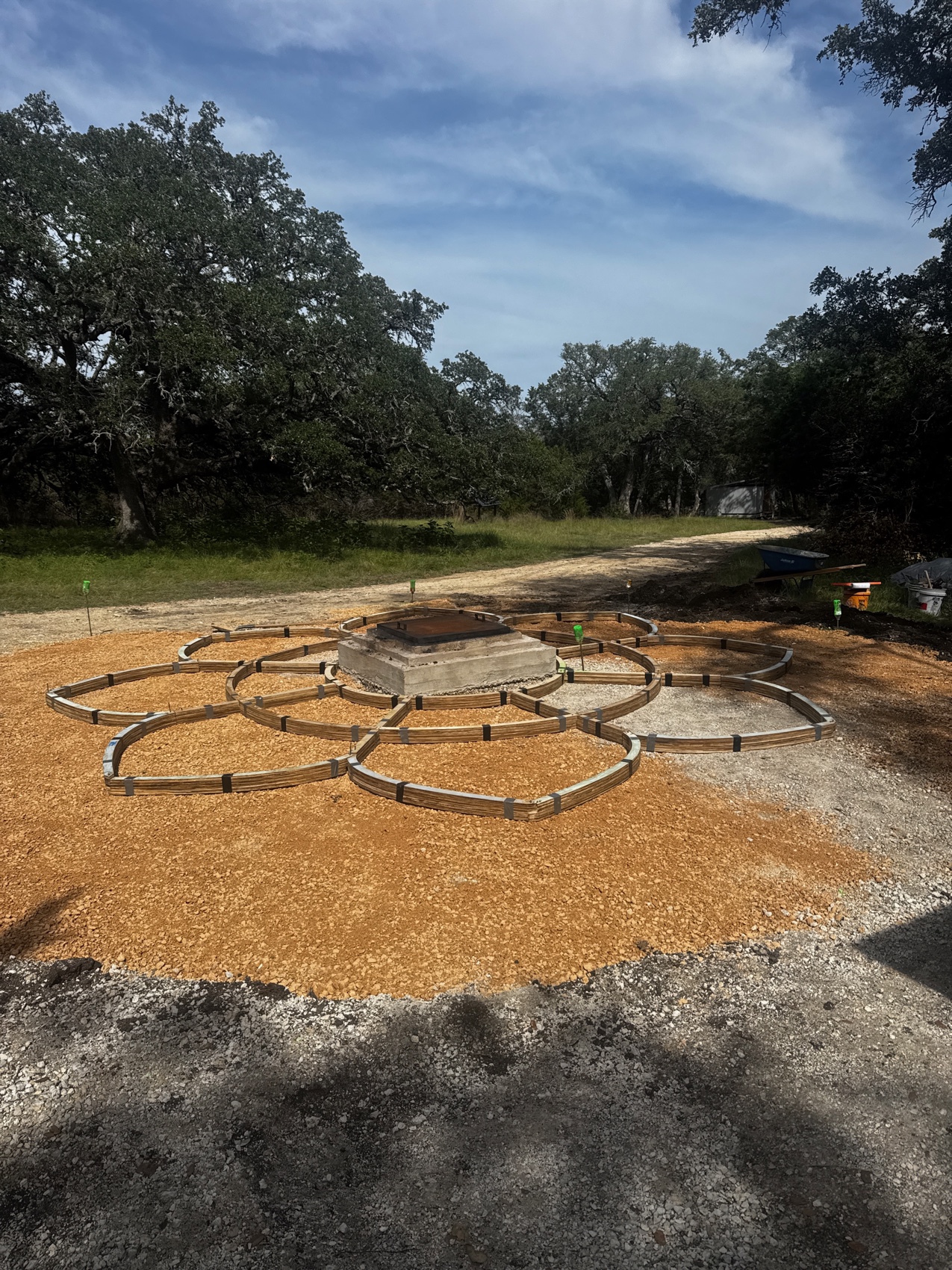
The truck came at half past ten. Nine yards went into the forms — we paid for ten, because concrete arrives by the full load and a lotus doesn't round down. Call it nineteen hundred dollars of cement and one morning you cannot take back — which is why the morning was already decided in the shop: every curve jigged to the drawing, every face sealed, every rib numbered. What the pour itself demands is the thousand small calls — how hard to vibrate so the petals fill but don't blow the seal, how thick to keep the aggregate where the curve thins at the tips, when to leave the material alone. No manual covers those. There is method, and there is the trained intuition the Institute exists to keep sharp: I called the corrections in two languages, and a crew with real hands landed every one of them, half past ten to five. The caliche held the whole thing dead level because the base was read and prepared to hold it. Then the unhurried part: lifting the forms off the way you'd free a fossil, an edge at a time. Every petal came away clean. Sealed faces let go — that isn't luck; that's the seal.
The landmark.
What stands now is eight concrete petals around a still center, ringed by native plantings and the bioswales that drink the rain. It is a built argument: that the most exacting geometry and the oldest symbol are the same impulse — and that a working landscape is allowed, now and then, to simply be beautiful and ask nothing of you but that you sit down inside it. It exists because a patron said yes to an unprecedented thing, and because a crew put their hands to it like it was theirs — which, in the record, it now is.
- The work
- A twenty-eight-foot concrete lotus landmark — land art you can sit inside.
- Geometry
- Eight petals, radial and exact, cast by hand.
- Craft
- Cast from birch formwork, assembled off-site to exact tolerances; concrete poured on location.
- The pour
- Nine yards of concrete, half past ten to five — and no second draft.
- Setting
- Texas Hill Country, under live oaks, ringed by native bioswales.
- At its heart
- A still, contemplative center — built to be inhabited, not just admired.