What we build · Canopy · Sheet S-1
Tree care that treats trees as infrastructure.
Oak wilt prevention · deep root watering · native planting · organic pruning
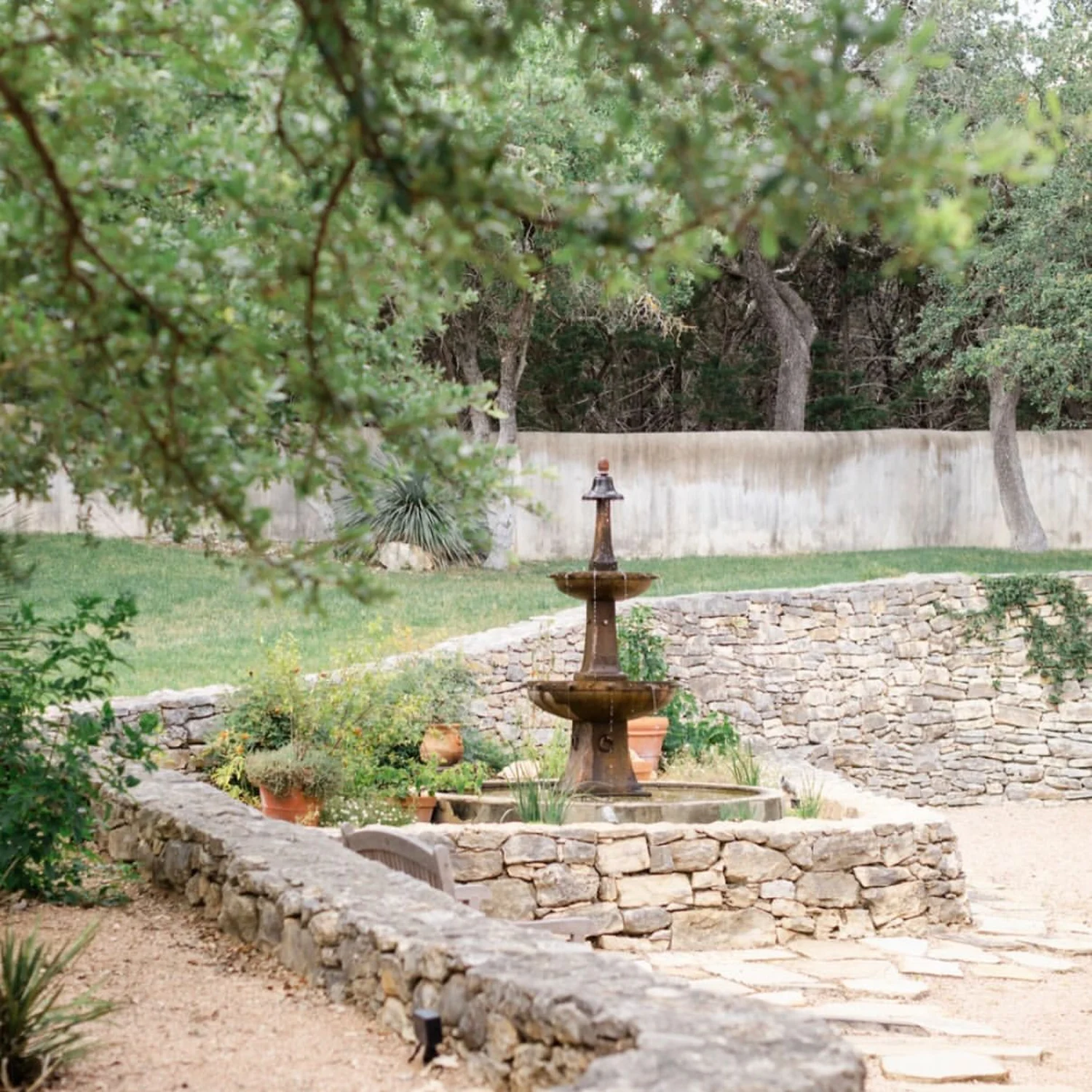
Shade is infrastructure, not decoration. A 60-year-old live oak in your front yard is worth more than the house — in cooling, in habitat, in property value.
Hill Country trees take decades to grow and minutes to lose. Oak wilt has killed more live oaks in Texas in the last 30 years than every other cause combined. Most of the deaths were preventable.
Your trees are 50-year assets and are treated accordingly. We assess. We deep-water. We prune at the right time of year. We plant natives that will outlive you. We remove only when there is no other option.
- Assess
- Tree by tree: species, age, canopy health, root flare, soil compaction, drainage, fungal indicators. Oak wilt scouting in season.
- Water
- Soaker hose or gator bag, sized to trunk diameter. 40–60 gallons per inch, once a month deep, in drought. We set it up; you run it.
- Prune
- Oaks: November through January only. Everything else: when dormancy or the species calls for it. Never because it is a Tuesday.
- Mulch
- Roots run 2–3× the canopy; most mulching covers the inner third. We extend the ring correctly and never up the trunk.
- Protect
- Fresh wounds sealed within 15 minutes. Propiconazole injection for high-value trees in known oak wilt centres.
- Remove
- Last resort, not first. Sometimes the answer is a soil program and three years of patient root recovery.
Bexar, Comal, Kendall and Bandera counties are all in active oak wilt zones. The disease moves through interconnected roots below ground and beetle vectors above. Most homeowners learn they have it when three or four trees are dying.
Prevention is cheap: no oak pruning April through October, every wound sealed within 15 minutes, high-value trees treated. A few hundred dollars per tree. Losing a mature live oak costs far more to remove, plus forty years of canopy.
Most tree services do not say this, because removals pay better than prevention. Noon does.
Reads withS-1.2 What is included · S-1.3 Common questions · B What we build · C Begin
- Prepared by
- NOONDesign ☉ Build ☉ Systems
- Issue
- 09.2026
- Studio
- San AntonioAustin · By commission anywhere
- Sheet
- S-1
Tree care · Sheet S-1.2
What we actually do.
Most properties start with an assessment and a watering program, then add as needed. Priced per property, on site.
| Included | |
| 01 | Tree health assessmentSpecies, age, structural soundness, oak wilt scouting, soil and drainage check. Photo and written report. |
| 02 | Deep root watering setupSoaker hose or gator bag specified to trunk diameter. Schedule and supplies handed off. |
| 03 | Organic pruningRight time of year for the species. Sterilised tools between cuts. Wound treatment on oaks. |
| 04 | Native tree plantingLive oak, cedar elm, Mexican sycamore, Mexican white oak, bur oak, Texas red oak. Sized to the lot’s 50-year arc. |
| 05 | Oak wilt preventionWound sealing, propiconazole injection for high-value trees, root-graft severance when justified. |
| 06 | Removal, when necessaryInsurance-certified, proper rigging, stump grinding optional. We try everything else first. |
Removals are scoped separately, by tree size, access and proximity to structures. San Antonio · Boerne · Bulverde · Helotes · the Hill Country.
- Prepared by
- NOONDesign ☉ Build ☉ Systems
- Issue
- 09.2026
- Studio
- San AntonioAustin · By commission anywhere
- Sheet
- S-1.2
Common questions · Sheet S-1.3
Tree care
November through January only. Oak wilt is spread by Nitidulid beetles that vector the fungus from infected trees to fresh wounds. The beetles are inactive in cold weather. April through October pruning of oaks is high-risk and should be avoided unless storm damage requires immediate action — in which case, seal the wound with shellac, latex paint, or pruning sealer within 15 minutes.
Live oak (Quercus virginiana — the keystone), cedar elm (Ulmus crassifolia — fast, fall color), Mexican sycamore (Platanus mexicana — west-shade specialist), Mexican white oak (Quercus polymorpha — evergreen, drought-deep), bur oak (Quercus macrocarpa — massive canopy), Texas red oak (Quercus buckleyi — brilliant fall). Avoid Bradford pears, mulberries, and ash.
Oak wilt is a fungal disease (Bretziella fagacearum) that kills oak trees by clogging their water-conducting vessels. It spreads two ways: above ground via Nitidulid beetles attracted to fresh wounds, and below ground via interconnected root systems. Prevention: only prune oaks Nov–Jan, seal wounds immediately, sever root grafts around infected trees, consider propiconazole injection for high-value trees in active zones.
Almost never as a first response. Most trees we get called to remove can be saved with soil work, deep watering, structural pruning, and patience. We’ve talked dozens of clients out of removals other arborists wanted. If a tree is genuinely structurally dangerous or fully dead, we remove — but we try everything else first.
During drought, a mature live oak needs approximately 40–60 gallons per inch of trunk diameter, applied deeply once per month. A 24-inch DBH live oak = 1,000–1,400 gallons per deep watering, ideally delivered via soaker hose around the drip line over 4–6 hours. Surface sprinkler watering does almost nothing for established trees — the water never reaches the deep roots.
- Next
- Start a project — tell us about the trees and the ground under them
- See
- What we build — the rest of the work, drawn and built
- Prepared by
- NOONDesign ☉ Build ☉ Systems
- Issue
- 09.2026
- Studio
- San AntonioAustin · By commission anywhere
- Sheet
- S-1.3