Training · Organics
The ground, alive.
Week 1 of the crew’s course: soil biology and organic matter. Read it, or press play and listen on the drive.
This is internal education for Noon's field crew. It is not an accredited certification and carries no license or credential.
Noon (Noon Systems Corporation) designs and builds cast-concrete fountains, courtyards and native gardens in Central Texas. Noon's standing rule: no synthetics on any ground Noon keeps, mosquito and fire-ant control included. The course teaches why that rule works, and what to do instead.
Week 1 of four. Weeks 2 to 4 follow.
1. Course outline
Four weeks, 30 to 45 minutes of reading and discussion each, plus one field assignment per week.
| Week | Topic | Field assignment | |---|---|---| | 1 | Soil biology and organic matter | Jar test, infiltration test and compaction probe on a real job (below) | | 2 | Water: infiltration, drainage, runoff, erosion, irrigation | Follow the water across one site in a rain or a hose test | | 3 | Plants: native vs adapted, root zones, Central Texas selection, mulch, establishment | Map root zones and mulch depth on one planted bed | | 4 | Field diagnosis: symptom vs cause; when stone, mulch, compost or plants fit; when to escalate instead of improvising; documenting the reasoning | Write up one diagnosis, cause first |
Organic inputs and chemical-free pest control are woven through weeks 1, 3 and 4: the idea in week 1 (feed the soil, then the plant), the plant side in week 3 (establishment, transplant care), and the diagnosis side in week 4 (pest and disease symptoms, and when an input is the wrong answer).
2. Learning objectives
Week 1: Soil biology and organic matter. After this week you can:
- Name the main groups of soil life (bacteria, fungi, earthworms) and say what each does for a garden.
- Explain what organic matter and compost do for soil structure, water and roots.
- Describe compaction and caliche, and say why Central Texas clay behaves the way it does.
- Explain why piling more soil or mulch on top rarely fixes a soil problem.
- Run a jar test, an infiltration test and a compaction probe, record the results, and know when to call the lead.
Week 2: Water. After this week you can:
- Describe how water enters, moves through and leaves a site.
- Tell infiltration, drainage and runoff apart, and spot erosion early.
- Read a site for where water goes before any digging.
- Explain deep, infrequent irrigation against shallow, frequent watering.
Week 3: Plants. After this week you can:
- Say what makes a plant native, and how adapted plants differ.
- Describe a root zone and why it decides spacing and depth.
- Choose plants for a Central Texas site by sun, soil and water.
- Apply mulch at a sound depth and keep it off stems and trunks.
- Care for a new planting through its establishment period.
Week 4: Field diagnosis. After this week you can:
- Separate a symptom from its cause.
- Decide whether stone, mulch, compost or plants fit a given problem, or none of them.
- Recognise the limits of crew judgment and escalate instead of improvising.
- Write down what you saw, what you checked and why you chose what you did.
3. Sources
Every link below was returned by a web search on Oct 16, 2026. I confirmed that the address exists in search results; I did not read the full text of each. Check the page yourself before quoting it to a client.
| Source | Use in this course | Link | |---|---|---| | Texas A&M AgriLife Extension, "Soil Preparation" (gardening library) | Texas soils: sand drains fast, clay holds water and limits air; organic matter; tilling when moist, not wet | https://agrilifeextension.tamu.edu/library/gardening/soil-preparation | | USDA NRCS, "Soil Health Principles" (PDF, 2023) | Soil as a living habitat; four principles (disturb less, keep it covered, keep roots living, add diversity) | https://www.nrcs.usda.gov/sites/default/files/2023-06/Soil%20Health%20Principles%202.3.pdf | | USDA NRCS, "Cropland In-Field Soil Health Assessment Guide" (Technical Note, 2025, PDF) | Infiltration ring and other in-field tests (written for cropland; we adapt it to garden beds) | https://www.nrcs.usda.gov/sites/default/files/2025-06/Tech%20Note%20Cropland%20In-Field%20Soil%20Health%20Assessment%20Guide-508.pdf | | Cornell-hosted Northeast Certified Crop Adviser study page, "Soil health and compaction" (CA4) | Penetrometer method: push at about 1 inch per second, note depth where resistance passes 300 psi | https://nrcca.cals.cornell.edu/soil/CA4/CA0435.php | | Texas A&M AgriLife, "Texas Imported Fire Ant Research & Management Plan" (L-5070, PDF) | Natural version of the Two-Step for fire ants (week 4) | https://extensionentomology.tamu.edu/wp-content/uploads/2018/03/L-5070-1.pdf | | AgriLife Today, "Spring is the time for Texans to 'two-step' toward fire ant control" | Plain-language summary of the Two-Step (week 4) | https://agrilifetoday.tamu.edu/?p=334552 |
Notes on the list: the AgriLife soil page showed an unrelated banner in the search result, so open it directly. The NRCS and Cornell tests are written for farm fields, so numbers like 300 psi are guides for judgment, not pass/fail marks in a garden bed. The L-5070 plan comes in more than one edition; confirm you have the current one.
What is established and what is not
Established (well supported by the sources above and general soil science):
- Soil is a living system; bacteria, fungi and earthworms drive the cycling of nutrients and the building of stable aggregates.
- Organic matter improves structure, water holding and infiltration.
- Compaction reduces pore space, so water and air move less and roots stop.
- Clay holds water and limits air; sand drains quickly and holds little.
- Wet soil worked with tools is easily damaged.
Uncertain or disputed (teach with care; do not promise a result to a client):
- Compost tea: the claim in Noon's old catalogue that a 24-hour brew multiplies soil biology "100 to 1000 times" is about the brew, not about what happens in your soil. Field benefit is inconsistent in the research. Treat tea as optional, never a fix.
- Biochar: the "1000-year" carbon storage claim varies a great deal with how the char is made. Benefits in Central Texas soil are not firmly shown.
- Percentage figures such as "soil biology drives 90% of soil function" appeared on a training slide. We could not trace the original; do not repeat it.
- Gypsum: it helps sodium-affected (sodic) clay. It does not break up all caliche, and does little for ordinary clay that is not sodic. A soil test says which you have. The old catalogue lists gypsum for caliche; this is the claim to test, not assume.
- Spinosad and similar "natural" pest products are organic-approved but are not harmless; spinosad is toxic to bees while wet. Whether it fits Noon's rule is a lead's decision (see Noon's own inputs, below).
4. Week 1 in full: Soil biology and organic matter
Reading time: about 20 minutes, then the quiz and the field assignment.
4.1 Soil is alive
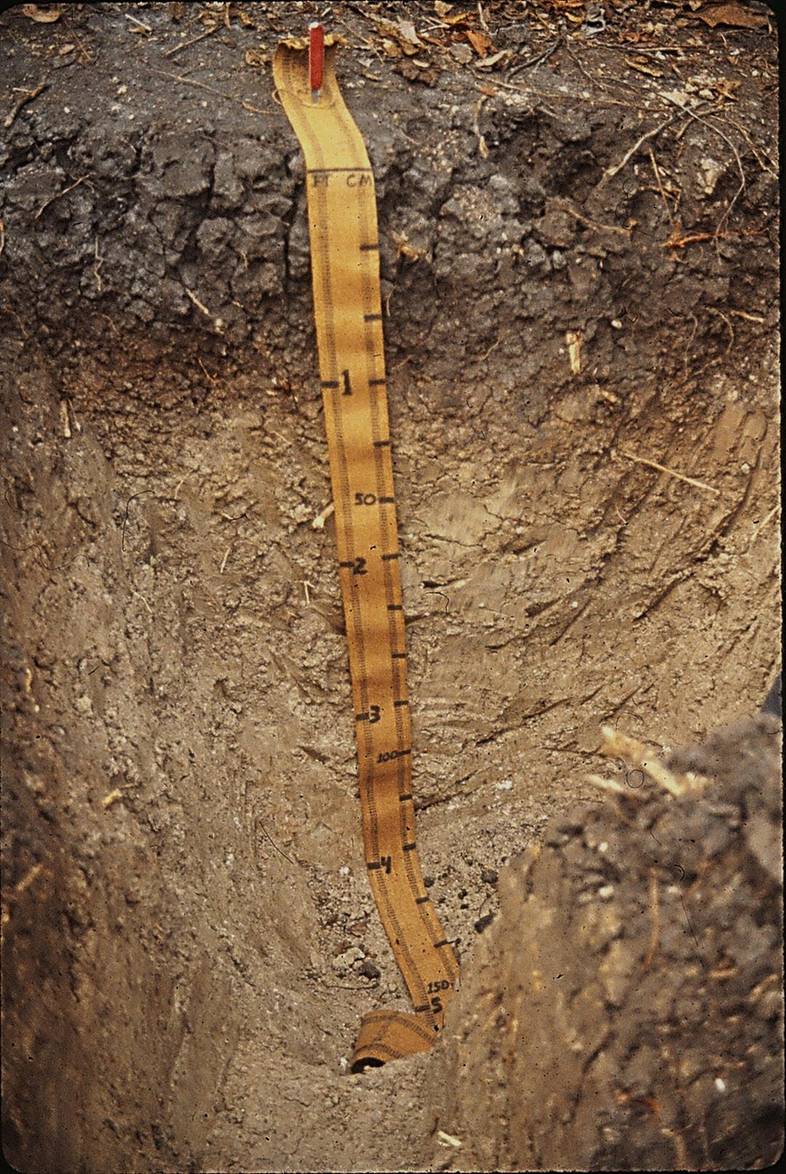
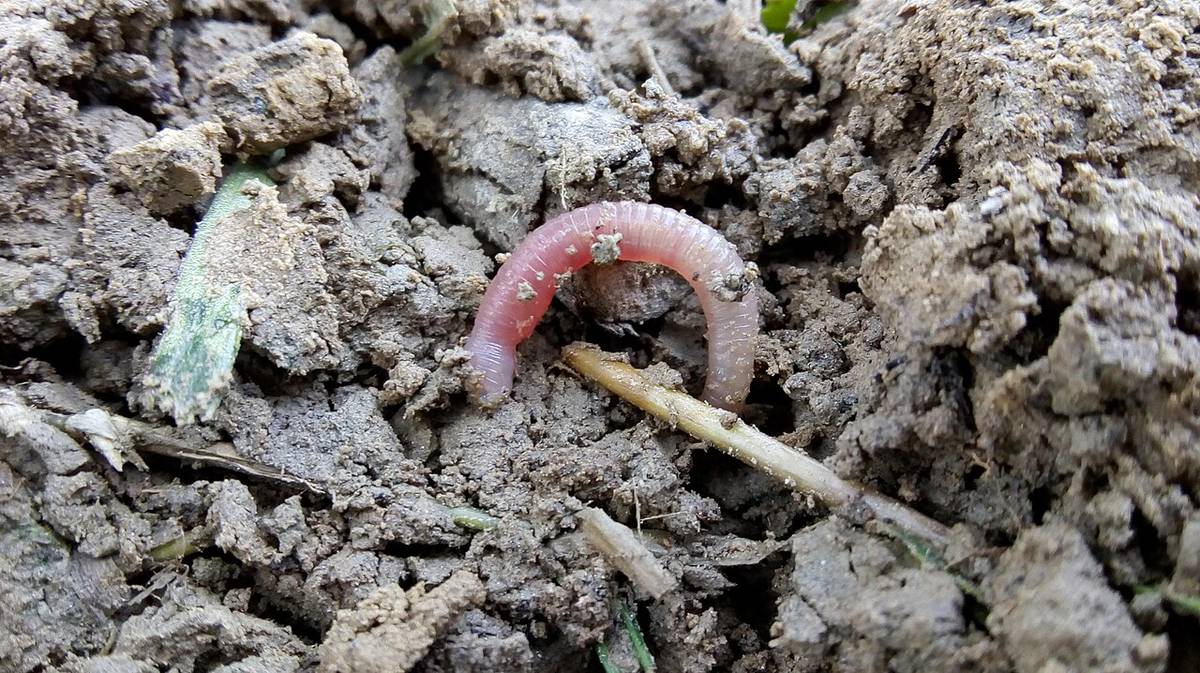
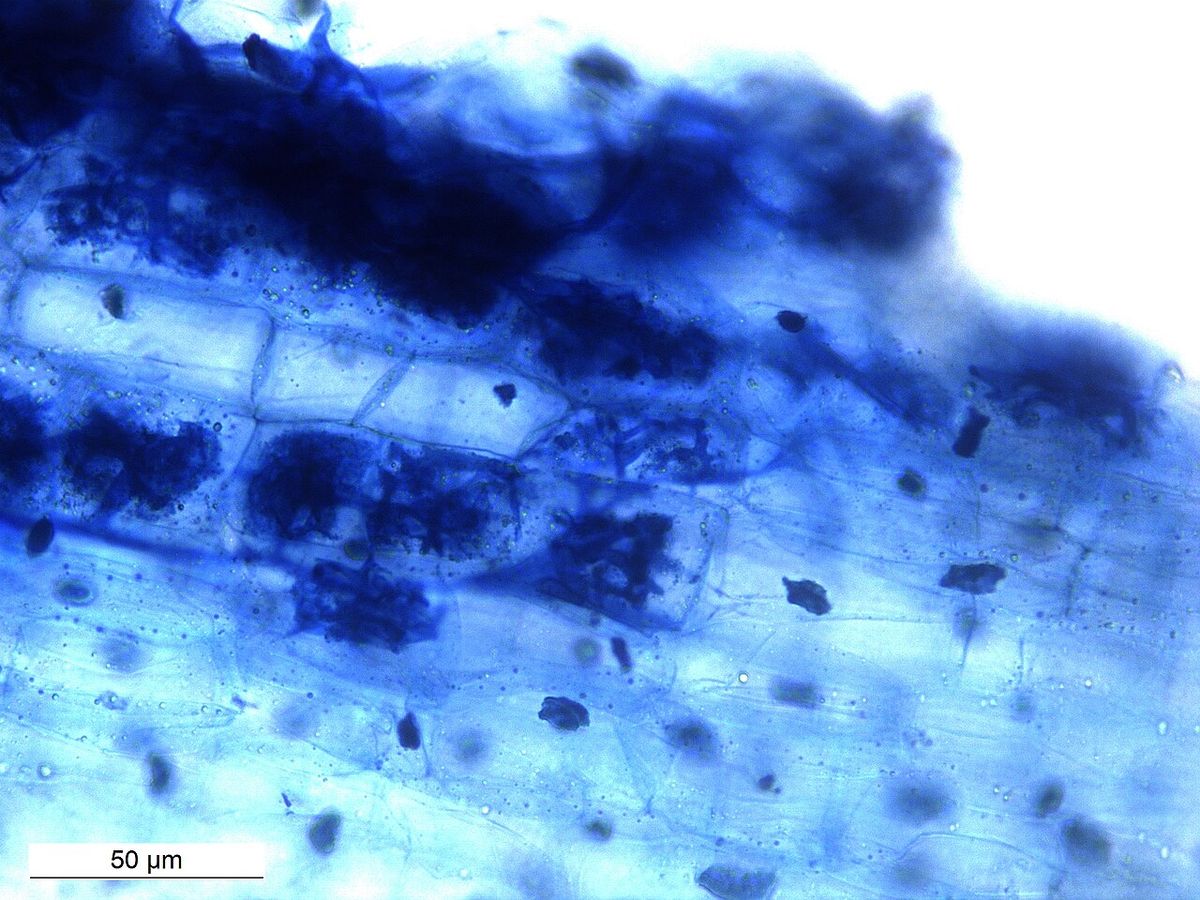
Healthy soil is a working community, not a bag of nutrients.
- Bacteria are the smallest and most numerous. They break down fresh organic material and release nutrients in forms roots can take up. Some make sticky compounds that glue particles into crumbs.
- Fungi grow as fine threads. Some break down tough material like wood and leaves. Mycorrhizal fungi attach to roots and trade water and minerals (especially phosphorus) for sugars the plant makes; their threads also bind soil into aggregates.
- Earthworms eat organic material and soil, mix it, and leave channels for water and air. Their castings are rich in available nutrients. Worms signal food, moisture and soil that is not too hot or too disturbed.
- Beneath those are protozoa, nematodes (many harmless or helpful), mites and insects, all eating or being eaten, which keeps nutrients moving.
The food for all of it is organic matter: dead roots, leaves, stems, manure, compost. Disturb the soil heavily, leave it bare or compact it, and the community shrinks.
4.2 Organic matter and compost
Organic matter is the carbon-rich part of soil that comes from living things. In Central Texas it is often only a few percent of the soil, and a little goes a long way. It binds particles into aggregates (crumbs) that make pore spaces for water and air, holds water and nutrients like a sponge, and feeds soil life.
Compost is organic material broken down by microbes into a dark, crumbly, earthy-smelling material. Finished compost is a soil conditioner more than a fertilizer. Judge it by smell and look: forest floor, not sour or ammonia; crumbly, not hot or slimy. Immature compost can burn or stunt young plants.
4.3 Structure, compaction and infiltration
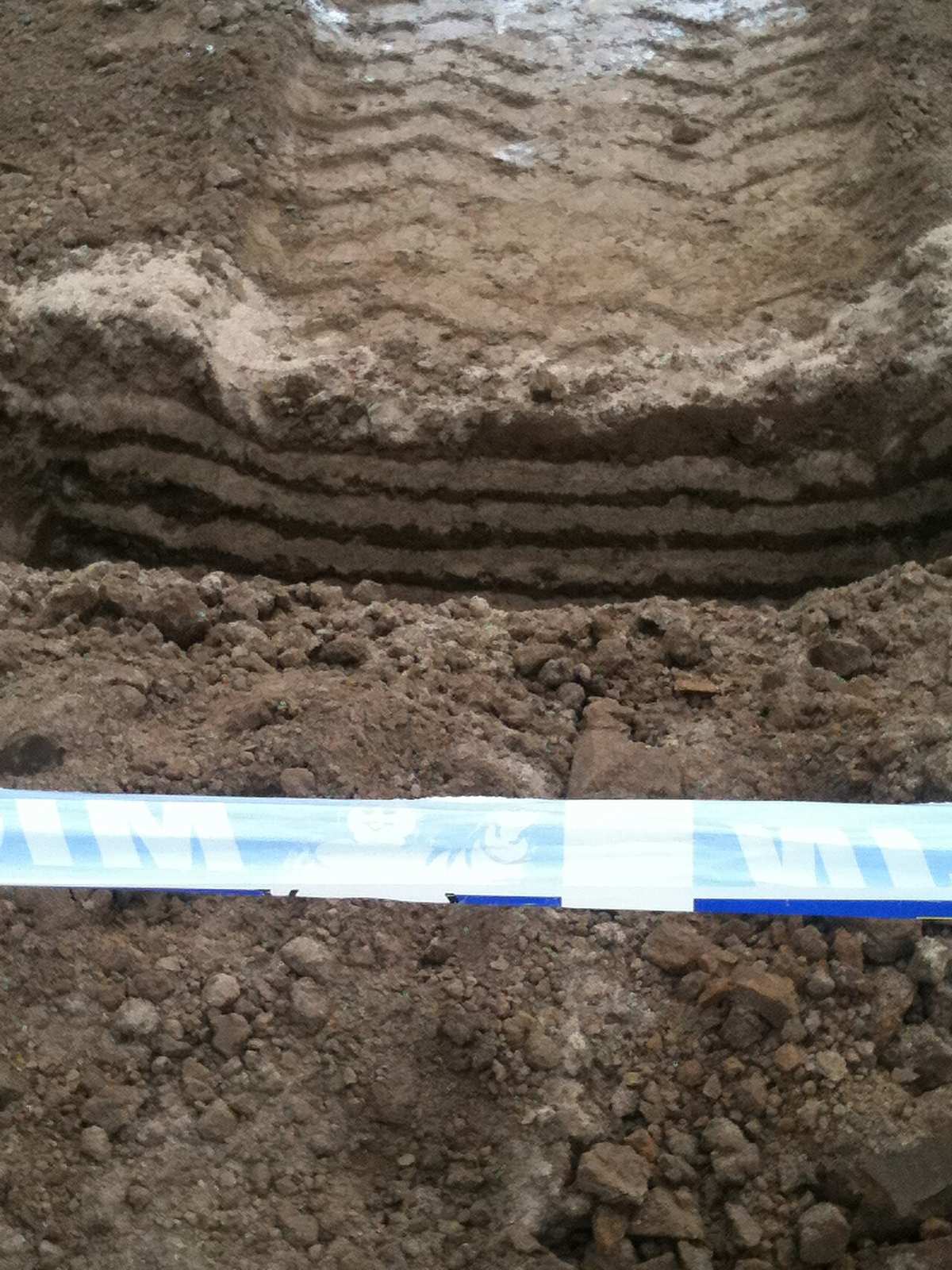
Texture (sand, silt, clay) you cannot change. Structure (how particles are arranged into crumbs and pores) you can improve slowly with biology and organic matter, and wreck quickly.
Infiltration is how fast water soaks in. Good structure lets rain enter and move down. Poor structure means ponding and runoff, which carries soil away.
Compaction is pore space squeezed out by machines, foot traffic, working wet soil, or bare ground and raindrop impact. Compacted soil has less air, less room for roots and slower infiltration, and the dense layer can sit a few inches down under a normal-looking surface. Job sites are often graded and driven on, so "plants keep dying in this bed" is often a compaction story.
4.4 Central Texas: clay and caliche
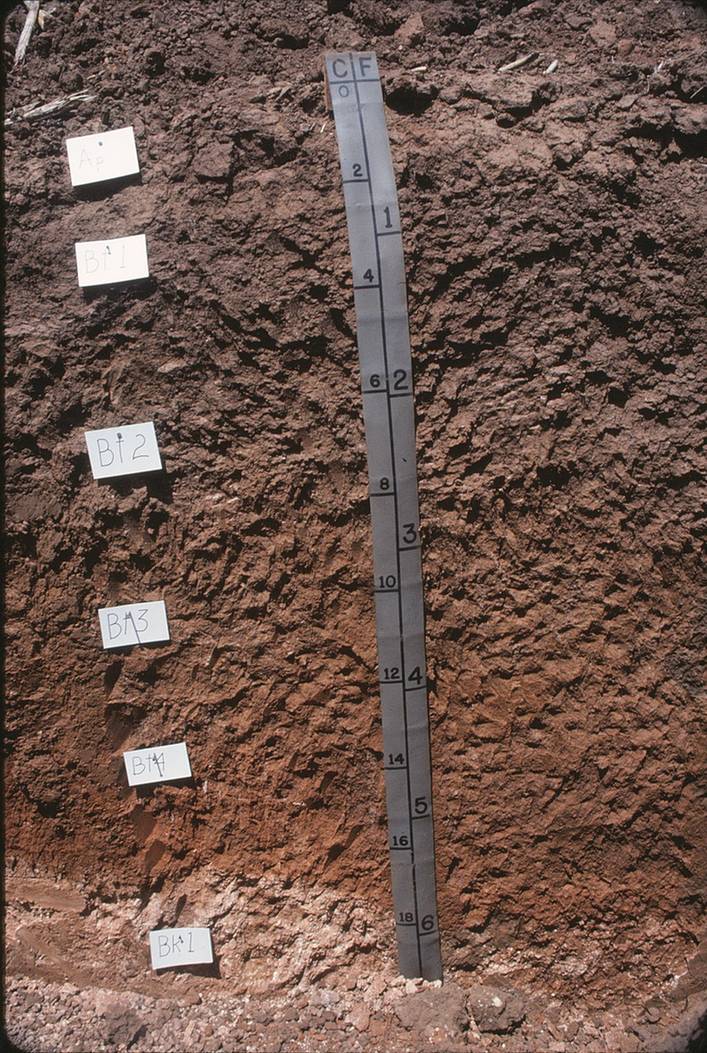
- Clay soils hold a lot of water and little air (Texas A&M says the same). They swell when wet, crack when dry, and compact easily if worked wet.
- Caliche is calcium carbonate that has cemented soil and rock into a hard, whitish layer, as scattered nodules or a solid shelf. Roots and water struggle to pass a shelf. It is also alkaline, which can lock up some nutrients, so yellow leaves may be a pH problem, not hunger.
- Work with these soils: pick plants that suit them, and escalate a shelf you cannot plant through.
4.5 Why piling on more doesn't fix a problem
- New soil over compaction or caliche creates a bathtub. Roots stay in the shallow fill and water collects at the boundary, so the plant drowns and dries in cycles.
- Mulch is a cover, not a cure. It holds moisture and protects the surface; it does not open a compacted layer or change drainage.
- Thick, unblended compost can seal into its own layer and go sour when wet.
- The symptom is not the cause. A dead plant or standing water may come from compaction, a shelf, grade that sends water to the bed, or the wrong plant. Find the cause first (week 4).
The NRCS principles agree: disturb soil as little as possible, keep it covered, keep living roots in it, add diversity.
4.6 Safety
- Gloves for soil, compost and amendments; cover cuts.
- Dust: dry compost, gypsum, biochar and caliche dust irritate eyes and lungs. Wet it down, work upwind, wear an N95 mask and eye protection.
- Wash hands before eating. Call 811 before digging anywhere new.
- Read the label of any input. "Organic" does not mean safe to breathe or swallow. Keep amendments out of storm drains.
4.7 Noon's own organic inputs
Read these two files and use them as the working list (do not copy them out):
inputs-from-old-site.json: 32 inputs in five groups (soil biology, pest balance, microbiome, minerals and amendments, disease management), each with what it is, where to source it and how to apply it, plus symptoms matched to inputs. Week 1 items: compost, worm castings, biochar, compost tea, gypsum. Its compost entry says to top-dress thinly each fall and not till it in.kits.json: thegardenlist pairs eight problems (fire ants, new roots, yellow leaves, caliche, caterpillars, aphids and whitefly, standing water, seedlings) with an approach and inputs. Used in weeks 3 and 4.
Two cautions: the catalogue is the old site's own text and some claims are marketing (see the uncertain list), and an input never replaces finding the cause.
Chemical-free pest control, previewed: prevention first (healthy soil, right plant, no standing water), then the least-impact tool, such as beneficial insects and nematodes, soap, a bacterial larvicide for mosquito larvae, or hand removal. Which products Noon uses on kept ground is the lead's decision, not the crew's.
5. Week 1 quiz
1. Name two groups of soil organisms and one thing each does for a garden.
Show the answer
Any two: bacteria (break down fresh material, release nutrients, glue crumbs); fungi (break down tough material; mycorrhizae trade water and minerals for sugars; threads bind aggregates); earthworms (mix soil, make channels, leave castings).
2. What is organic matter, and what are two things it does for soil?
Show the answer
The carbon-rich part of soil from living things. Any two: binds particles into crumbs, holds water and nutrients, feeds soil life, improves infiltration.
3. A bed has water standing 20 minutes after rain, and the surface looks fine. Name two possible causes below the surface.
Show the answer
Any two: compaction layer; caliche shelf; clay with poor structure and little organic matter; fill of a different texture making a boundary; grade sending extra water to the bed.
4. Why does a layer of fresh topsoil over caliche often fail?
Show the answer
Roots stay in the thin new layer and water collects at the boundary, so the bed is wet, then dry. The shelf is not fixed. Escalate to the lead.
5. A client says: "Cover the yard in six inches of mulch and the soil will fix itself." What do you say?
Show the answer
Mulch is a cover, not a cure. A moderate layer helps a planted bed, but thick mulch against stems and trunks does harm. Check infiltration and compaction first and call the lead.
6. Field assignment: three tests on a real job
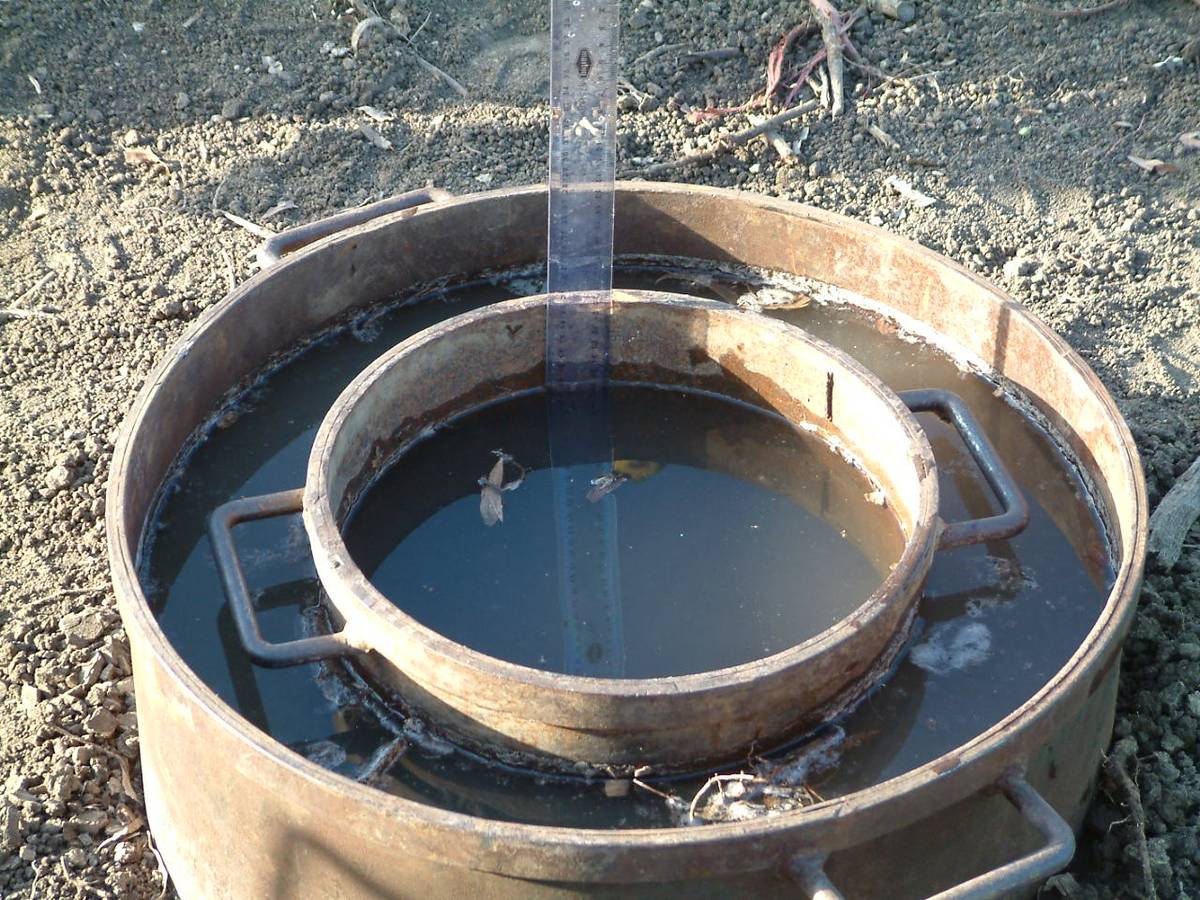
Pick one planting area with the lead's okay, on a day when soil is moist (a handful holds together when squeezed and breaks when poked). Allow about 45 minutes. Bring a shovel, clear straight-sided jar, 6-inch ring (or cut can), 500 ml of water, timer, a steel rod or wire flag, ruler, gloves and a phone.
Fill a jar one-third with soil from 4 to 6 inches down, add water nearly to the top, shake hard for a minute, let settle. Sand drops in about a minute, silt in hours, clay stays cloudy a day or more. Photograph at one minute and at 24 hours; estimate the share of each layer.
Push the ring about 3 inches in, level. Line it with plastic wrap, pour in 500 ml (about a 1-inch rain), pull the wrap, and time until the surface just glistens. Repeat right after in the same spot, and once in a second spot. Record all times.
Push a rod straight down at about an inch a second. Note the depth where it gets hard or stops. Take at least eight readings across the area. Mark readings that hit rock.
Write down: date, weather and last rain; soil moisture, colour and smell; jar result; infiltration times; probe depths and any white (caliche) or stony layer; worms, roots or fungal threads seen; photos with a tape for scale; one sentence on what you think is going on and why.
Call the lead the same day if:
- Most probes stop at 6 inches or less, or you hit a white cemented layer.
- Water has not soaked in after 15 minutes.
- Soil smells sour or rotten or has an oily sheen.
- You find anything buried (pipe, wire, slab): stop digging.
- Any fix would cut through caliche or change grade. That is the lead's call.
Do not add amendments or bring in soil based on this test alone. The job is to measure and write down what you saw.
Weeks 2 to 4 will be written after this one is reviewed.
- Prepared by
- NOONDesign ☉ Build ☉ Systems
- Issue
- 09.2026
- Studio
- San AntonioAustin · By commission anywhere
- Sheet
- T-1