Situation
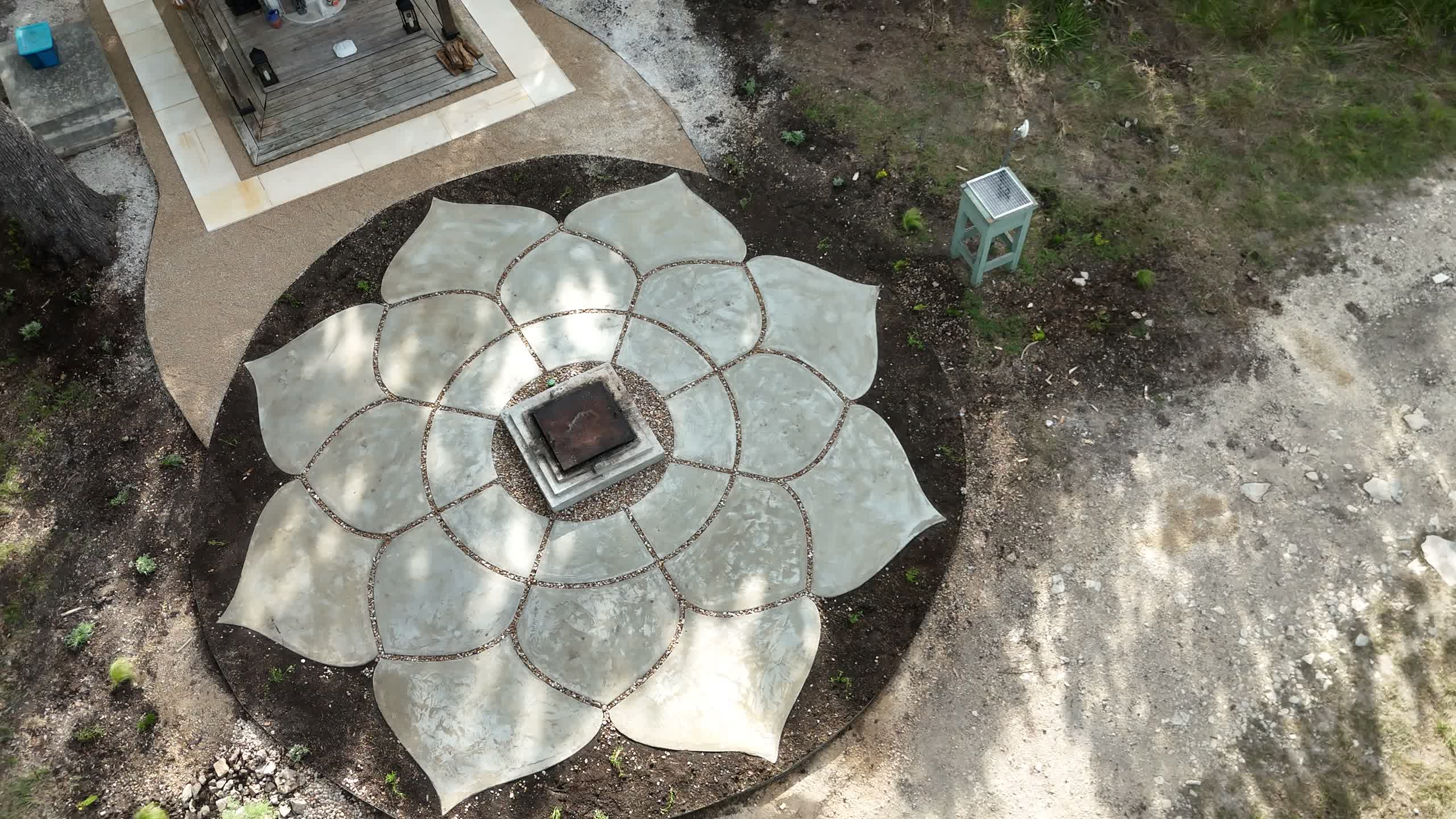
A 28-foot concrete lotus, raised and leveled, surrounded by bioswales. The form was arrived at three times over — traditional Eastern geometry, Western mathematics, and a Latin intuition I can only call by its name, el ojo, the eye — and all three agreed on the same shape, which is reassuring, because the concrete was not going to take a vote. What everyone praises is the object made of concrete. What made the object possible was made of wood.
Observation
Admiration goes to the form. It should go to the mold, which is the only thing with a say in whether the form happens at all. The whole piece was cast in birch formwork — layered, sealed, assembled off site to a specification that allowed for no error and granted no mercy — and only then was the concrete poured on location.
The discipline nobody sees is the unglamorous business of getting the casting back out of the wood without leaving a mark. We wetted the forms before the pour, so the wood would shrink as everything dried and let the concrete go, then struck them away by hand with rubber mallets — gently, the way you wake someone you still need a favor from. The concrete never got a grip on the wood.
What we learned
A 28-foot pour does not forgive. There is no second take on the geometry, and cured concrete declines all requests to be sanded into apology. The landmark's quality was decided days before the pour, in how precisely the birch was layered and sealed — which is to say it was decided by the part no visitor will ever notice. And the piece only earns its footprint because the bioswales around it do real water work. In ecological craft, beauty and function are not two departments. They are one problem wearing a good suit.
The mold decides the monument. Build the thing nobody sees to a tighter tolerance than the thing everybody does.