Situation
A city inspector flagged the property for sending its runoff next door, uninvited. The county specification prescribed the usual remedy: a 4-foot concrete drain channel, about $9,400 installed, to move the problem along faster and call that a solution. The owners had the good sense to ask whether there was another way.
Observation
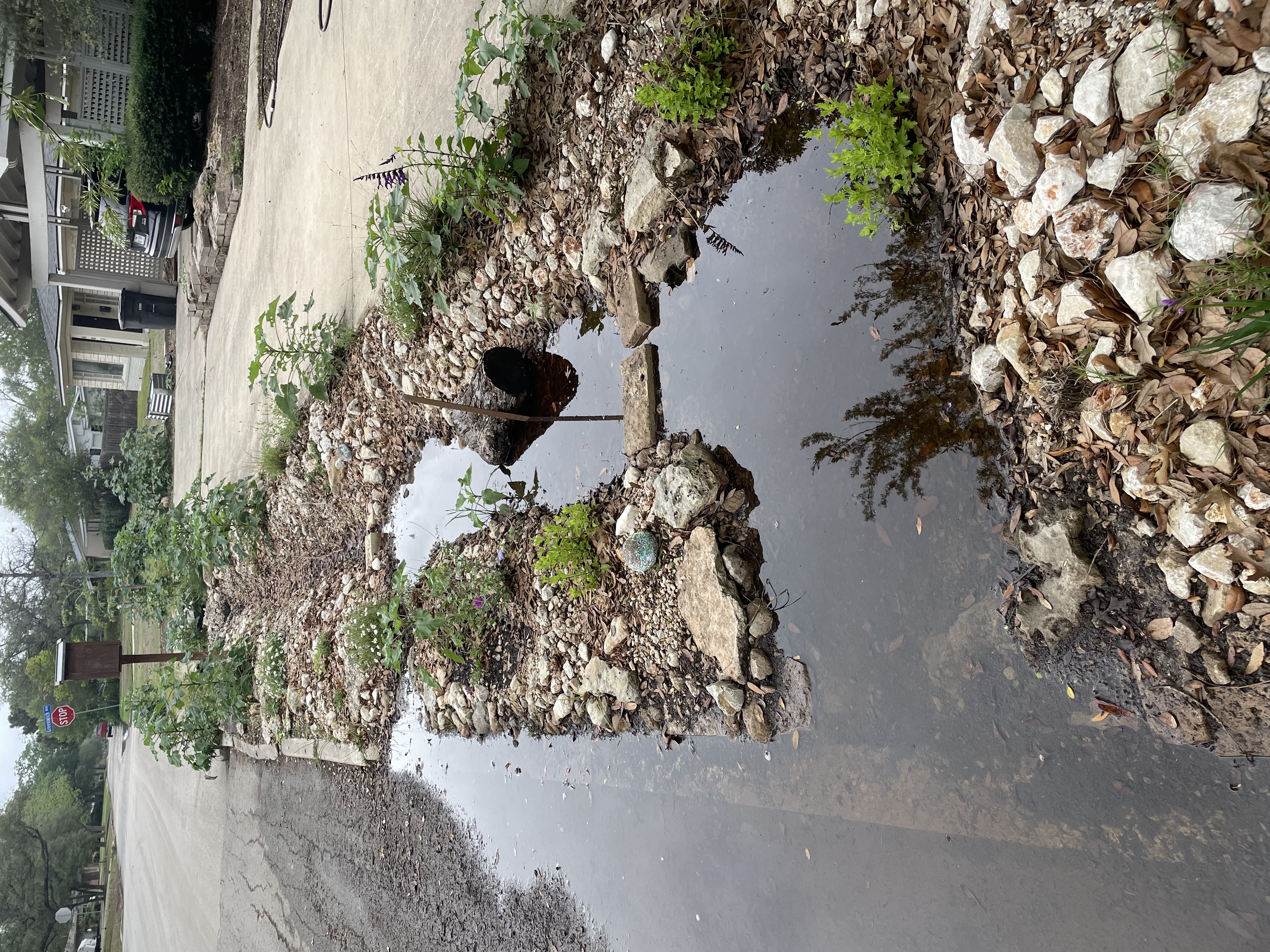
We installed a 12-foot bioswale instead: native sedges and inland sea oats on a gravel-amended base, a gentle 2% grade, a modest check dam of fieldstone halfway down to slow the procession. The first October storm obliged us with a test — 2.4 inches in 90 minutes — and we measured the outflow at the swale's terminus. Runoff was 78% slower than the upstream culvert under the same storm volume. The neighbor's lot stayed dry, and the neighbor, mercifully, stayed quiet.
What we learned
The concrete channel would have moved the water faster — and fast water is precisely the author of every downstream problem the channel was hired to prevent. It is a remedy that subscribes to the disease. The bioswale did the opposite: it held the water long enough for the soil and the root mass to get a word in. Same problem, inverted physics, half the cost. The storm drain never wanted the water anyway. Whether a swale will hold on your lot comes down to how fast your ground drinks — which is exactly what a full Land Report of your ground measures before we cut the first grade.
Slow it, spread it, sink it. Concrete pretends to solve drainage. A swale actually does.