What we build · Soil biology · Sheet S-2
Caliche isn’t soil yet. We build the rest.
Compost · biochar · worm castings · KNF inputs · no synthetics
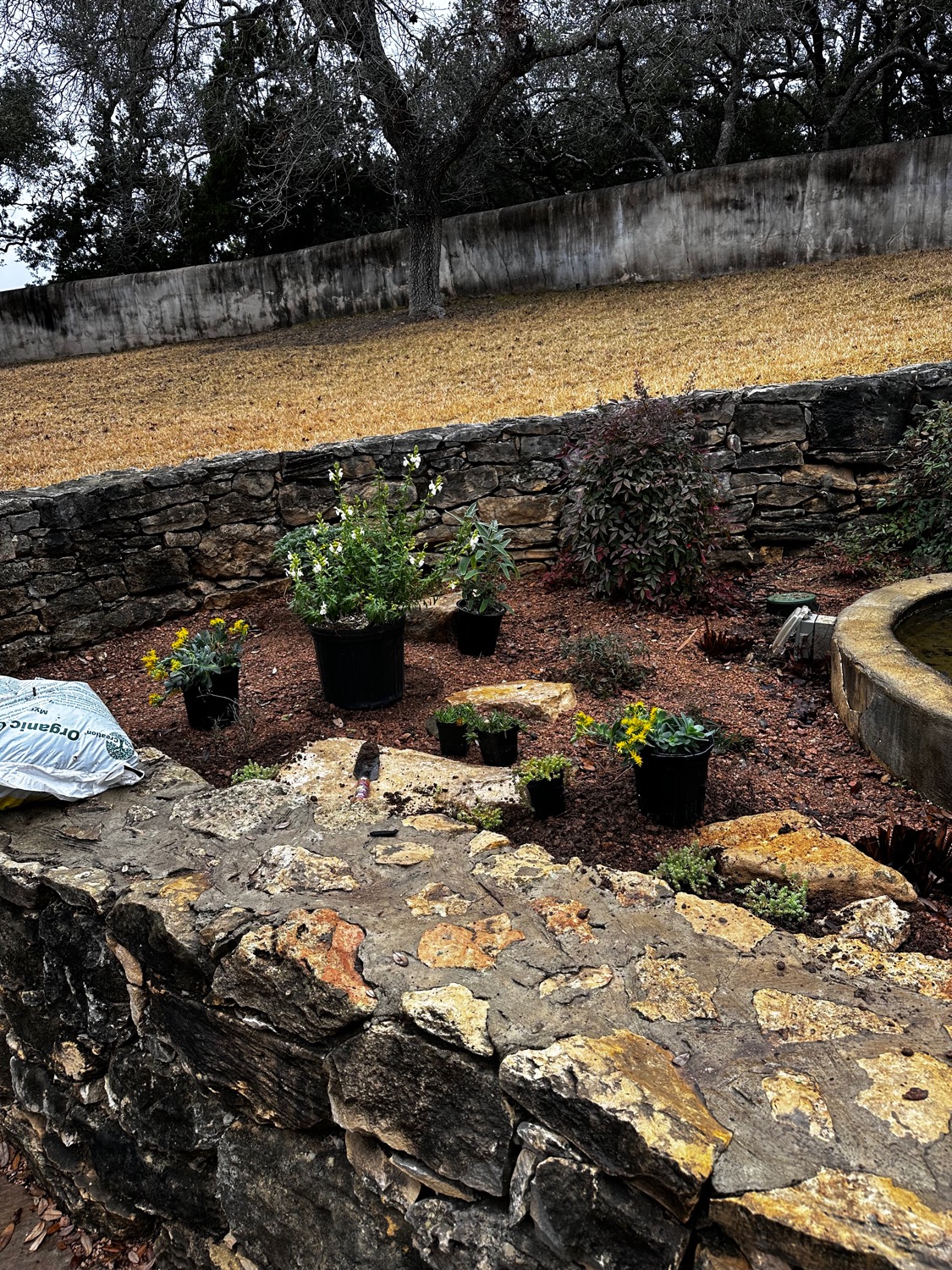
Most caliche properties get bagged topsoil dumped on top — raised beds floating on stilts. Those investments don’t last.
Building soil makes every other landscape decision easier. Plants establish faster. Water moves down instead of off. Pest pressure drops. Drought resilience compounds year over year.
This is the work that should have happened before anything else: compost, biochar, worm castings, Korean Natural Farming inputs. No synthetic fertilizers. No quick-release nitrogen. No spray-and-pray.
- Top-dress
- 2 inches of compost every fall. The single biggest lever; the microbes do the rest.
- Biochar
- 5–10% in planting holes, pre-loaded with worm castings. Permanent structure.
- KNF weekly
- FPJ, WCA, OHN, IMO. Real microbial inoculation, made on site.
- Cover crops
- Austrian winter pea, crimson clover, daikon radish. Fix nitrogen, break compaction, feed microbes.
- No tilling
- Broadfork instead. Tilling destroys the structure being built.
Starting a food garden, you will need this work now or scramble for it later. Installing a native landscape over caliche, the soil program decides whether the install thrives or merely survives.
Synthetic fertilizers — Miracle-Gro, weed-and-feed, granular NPK — work fast and look like they work. They also burn out soil biology, salt-load the soil, push tender nitrogen growth that pests target, and create dependency. The plant gets fed; the soil gets poorer.
Organic and biological inputs run the other direction: feed the biology, the biology feeds the plant. Slower start. After one season the soil is measurably better. After three, it is a different soil.
Synthetic fertilizer is feeding your kid Soylent. They get the macros. They don’t get a microbiome. Plants need theirs too.
Reads withS-2.2 What is included · S-2.3 Common questions · B What we build · C Begin
- Prepared by
- NOONDesign ☉ Build ☉ Systems
- Issue
- 09.2026
- Studio
- San AntonioAustin · By commission anywhere
- Sheet
- S-2
Soil · Sheet S-2.2
What we actually do.
Most clients start with one zone and add others as they see the results. Priced per property, on site.
| Included | |
| 01 | Compost delivery + spreadAged hardwood compost, locally sourced. 2–3 inch top-dress. The foundation of every program. |
| 02 | Biochar, mesquite or oakLocally pyrolyzed. Pre-charged with compost tea. Permanent soil structure improvement. |
| 03 | Worm castingsTexas worm farms. Slow-release nutrients and biology. Used in planting holes. |
| 04 | KNF input programWeekly FPJ, WCA, OHN, IMO. Builds the microbial population that does the work. |
| 05 | Compost tea brewingOn-site aerated compost tea. Drench beds and foliar feed. |
| 06 | Organic fertilizer, when neededFish emulsion, kelp, alfalfa meal. No synthetics. No quick-release N. |
Real improvement by month six; a different soil by year three. San Antonio · Boerne · Bulverde · Helotes · the Hill Country.
- Prepared by
- NOONDesign ☉ Build ☉ Systems
- Issue
- 09.2026
- Studio
- San AntonioAustin · By commission anywhere
- Sheet
- S-2.2
Common questions · Sheet S-2.3
Soil
Compost, layered over time. Not bagged topsoil dumped on top. The compost top-dress (2 inches annually, ideally in fall) builds biologically active soil that breaks down the caliche cap from above and provides the structure plants need. Biochar (5–10% in planting holes) gives permanent structural improvement. KNF inputs build the microbial population that powers the system.
Biochar is pyrolyzed wood — charcoal made in low-oxygen kilns. Charged with compost or worm castings, it becomes a permanent home for soil microbes: high surface area, high cation exchange. 5–10% in planting holes gives lifetime structural improvement to caliche soil. Mesquite is our preferred feedstock locally.
Yes, for long-term soil health. Synthetic fertilizers feed the plant directly but burn out soil biology, salt-load the soil, and create dependency. Compost feeds soil biology first; soil biology feeds the plant. After 2–3 seasons of a compost program, plants need almost no fertilizer at all — the soil does the work.
For top-dressing established beds, 2 inches annually = 1 cubic yard per ~160 ft². For amending caliche in new beds, 4–6 inches mixed into the top 12 inches = 1 yard per ~50 ft².
Korean Natural Farming. A set of farm-made organic inputs developed by Cho Han-Kyu: Fermented Plant Juice (FPJ), Indigenous Microorganisms (IMO), Oriental Herbal Nutrient (OHN), Water-soluble Calcium (WCA), Lactic Acid Bacteria (LAB). All made from local plants and water. Used by organic farmers globally. Real microbial inoculation that builds soil biology fast. We make them on site for client properties.
- Next
- Start a project — tell us about the beds and the ground
- See
- Ground, read first — the ground read before anything is designed
- Prepared by
- NOONDesign ☉ Build ☉ Systems
- Issue
- 09.2026
- Studio
- San AntonioAustin · By commission anywhere
- Sheet
- S-2.3