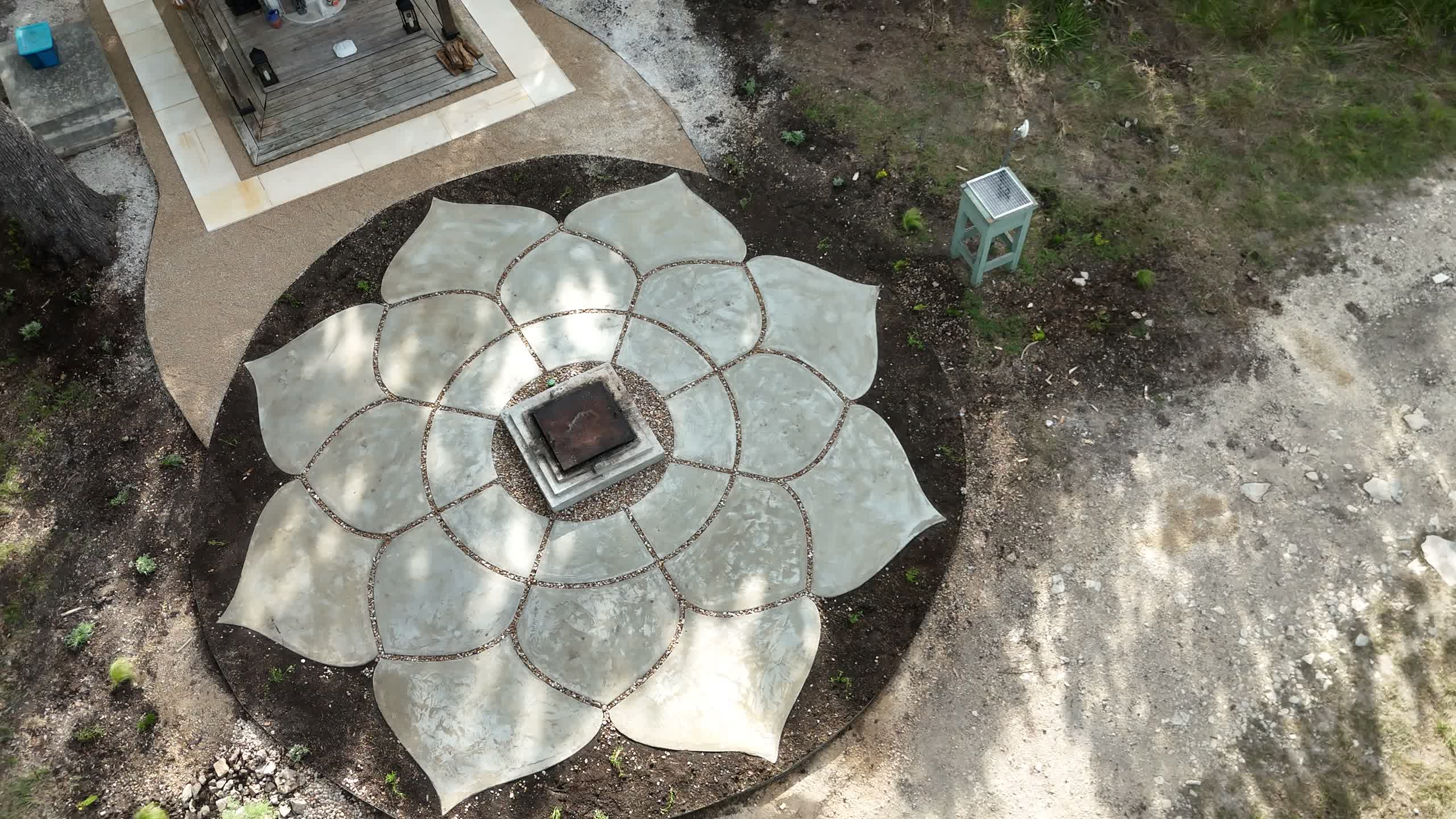
A working index of Noon's cultural output and collaborations. Most are still in progress — we publish an artifact when it has earned the right to be looked at, and not a day sooner.
002
Brass aqueduct, residential.
Sculpture · Hydraulic
A hand-formed brass aqueduct carrying captured rainwater across a residential garden. The patina photographed across six months, because brass, like everyone worth knowing, improves with a little weather.
Documenting
003
Sound, at the swale.
Audio · Site recording
Field recordings made at functioning bioswales after rain. The acoustic signature of water moving through a properly-graded system — which is to say, the sound of a thing doing exactly what it was built to do. It is a better sound than people expect.
In recording
004
Acequia as score.
Essay · Music
A reading of the 250-year-old San Antonio acequia system as a piece of distributed musical composition. The engineers who dug it would be surprised to hear they wrote a score. They wrote one anyway. Forthcoming in a Source research entry.
In preparation
005
Stone, by hand.
Photography · Process
Documentary photo series on the dry-stone craft used in Noon's hardscape work. Lessons from Hill Country masons who keep their best instructions in their hands — recorded now, while the hands are still here to read.
In progress
006
Ceremonies, private.
Ritual · Hosted
Small gatherings at completed properties — soft openings, water blessings, harvest dinners. A finished place deserves to be inaugurated, not just invoiced. Documentation lives with the client by default; a subset is published only with consent.
Ongoing
007
Mosaic floor cycle.
Sculpture · Tile
A tile cycle planned for a private courtyard — the iconography of the Edwards Plateau watershed, rendered as a composition you read with your feet. A map you're meant to walk across rather than fold away.
In design
008
Artists, in residence.
Program · Forthcoming
A residency program in the Hill Country — one artist per season, two weeks, no committee. Sculpture, photography, music, writing. The output stays with the artist; one piece per residency joins the archive, which is a generous trade and we know it.
Launching 2027
009
The mesquite guitar.
Instrument · Music
A guitar built from a single Hill Country mesquite — a tree most ranchers spend good money to kill. The tree, the wood, the instrument, the recordings made with it: tracked together as one cultural object, start to song.
In preparation