What we build · Sheet B
Cast the symbol. Build what keeps it.
The piece your people gather around, and the water, drainage and planting that keep it standing. Drawn on one side of the seam, built on the other.
The symbol
Cast by hand, drawn to the inch.
 Plan · as built, from the airThe Lotus · the plan and the slabShrine platforms, mandalas & memorial groundA lotus, a cross, a star, a seal, a name and a date — drawn to the inch and cast at courtyard scale. The plan you approve is the slab you walk on.Seen at L-1 · The LotusDrawn, then struckTowne Twin, and a stamped patioCourtyards & cast patternsPoured and laid floors with the pattern struck into them, for gathering ground. The drawing is set out on the ground to the inch; the pattern is tamped into the wet concrete by hand.Seen at L-3 · Towne Twin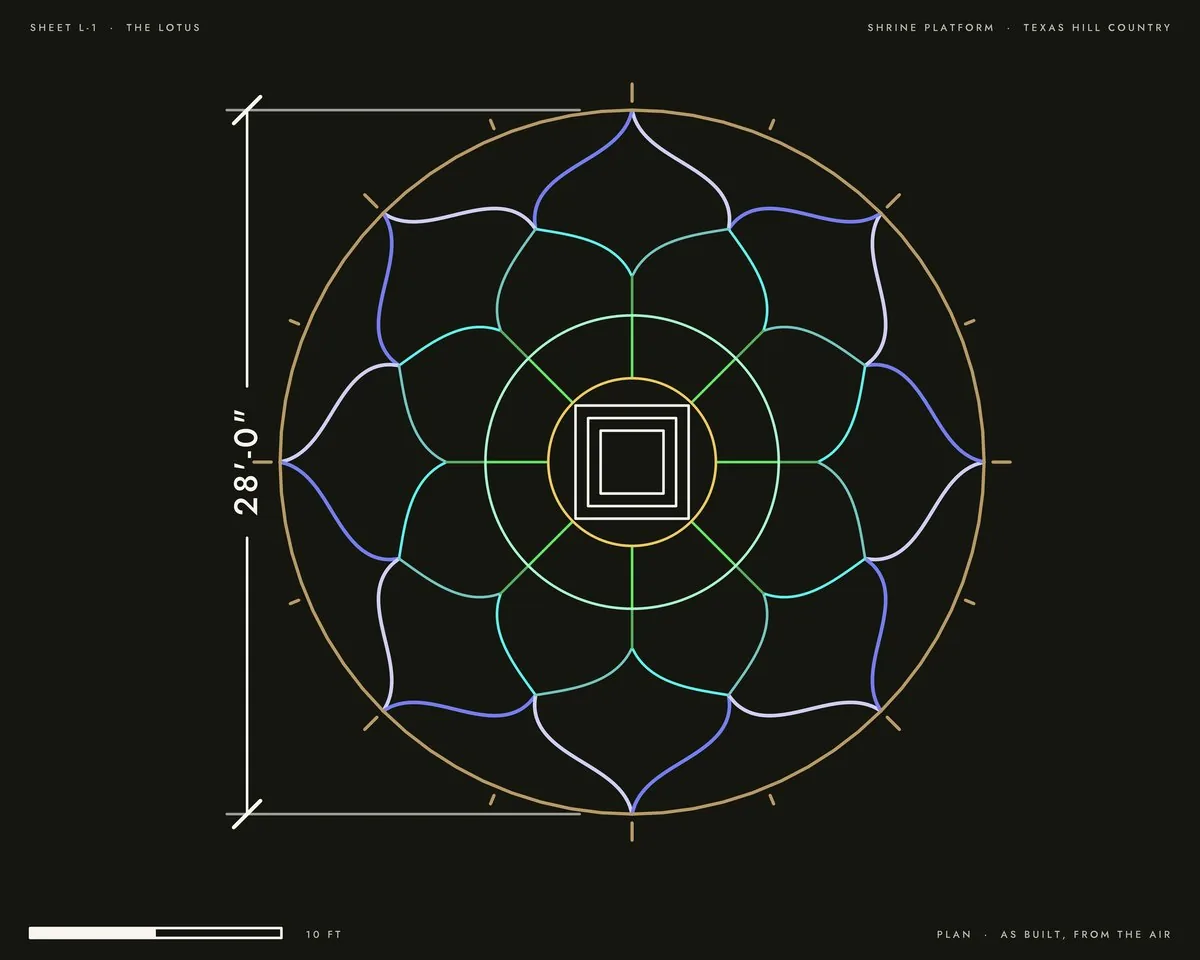
 Her hand in the waterTowne Twin · planting dayFountains & water featuresCast basins, spillways, jets and runnels.Seen at L-3 · Towne TwinGravity-fedTowne Twin · the rillAcequias & aqueductsChannels that move water with no pump and no power, laid block by block.Seen at L-3 · Towne Twin
What keeps it
Water, ground and canopy, so the symbol is still there in fifty years.
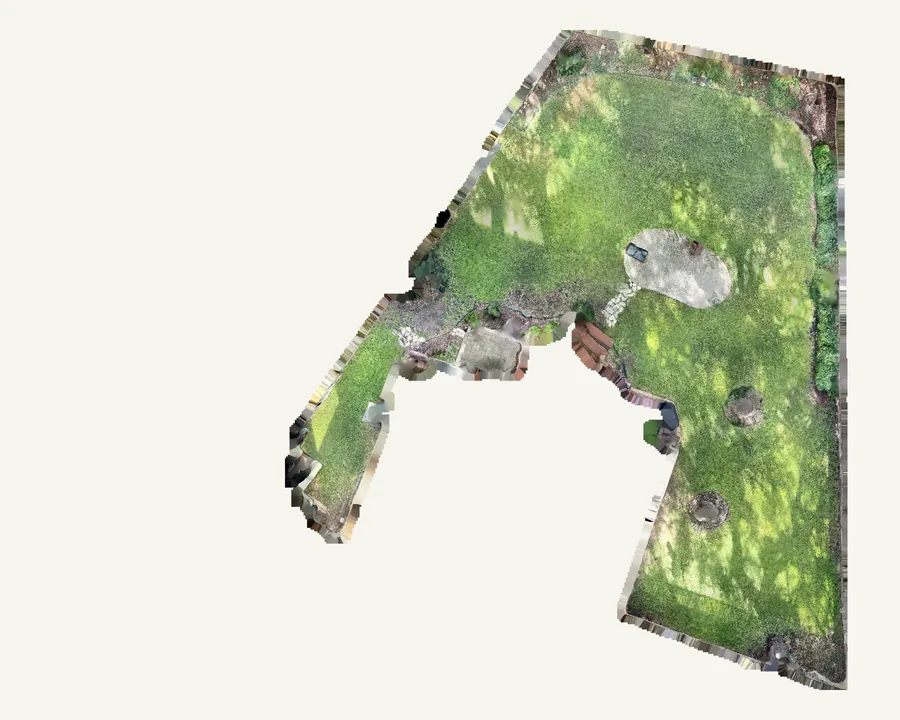
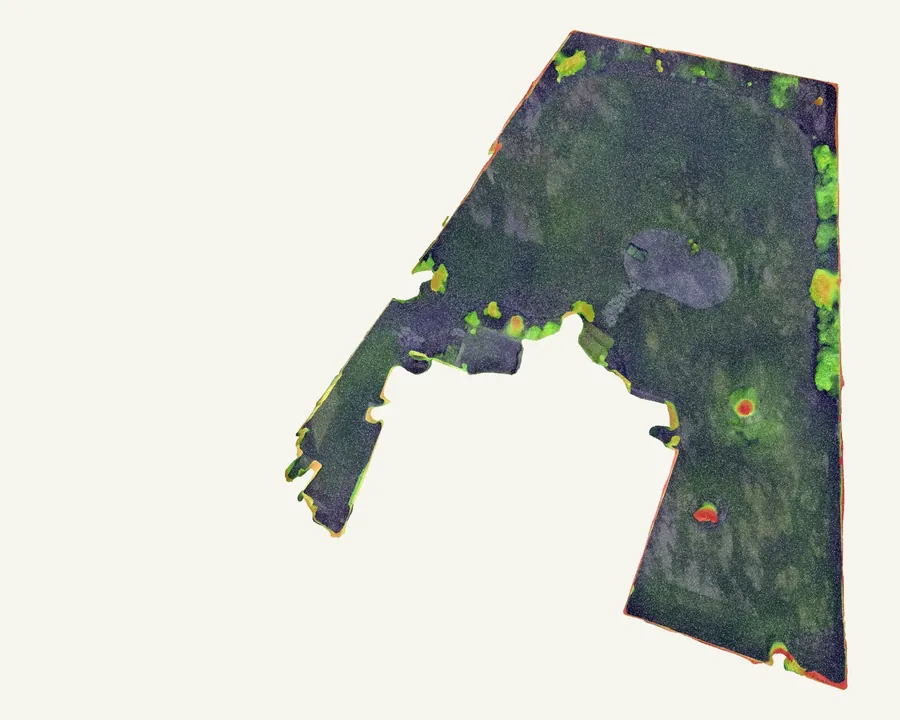
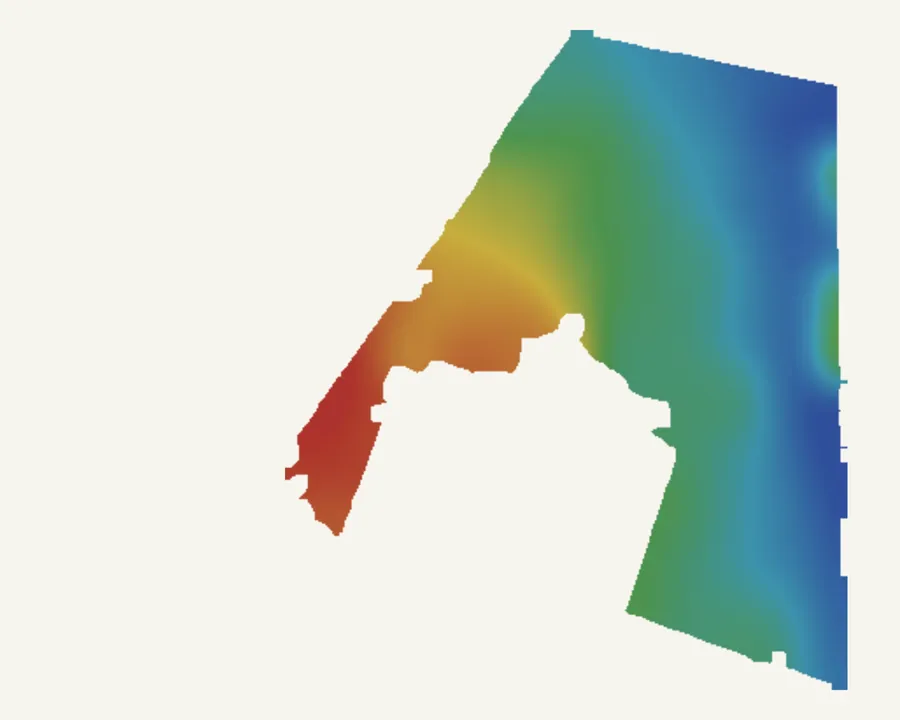
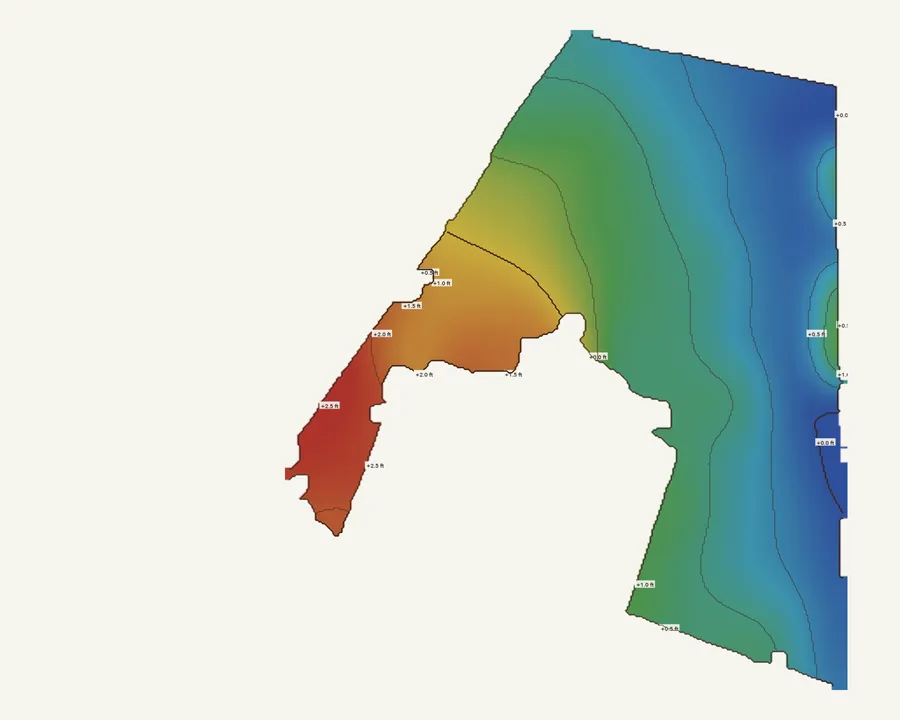
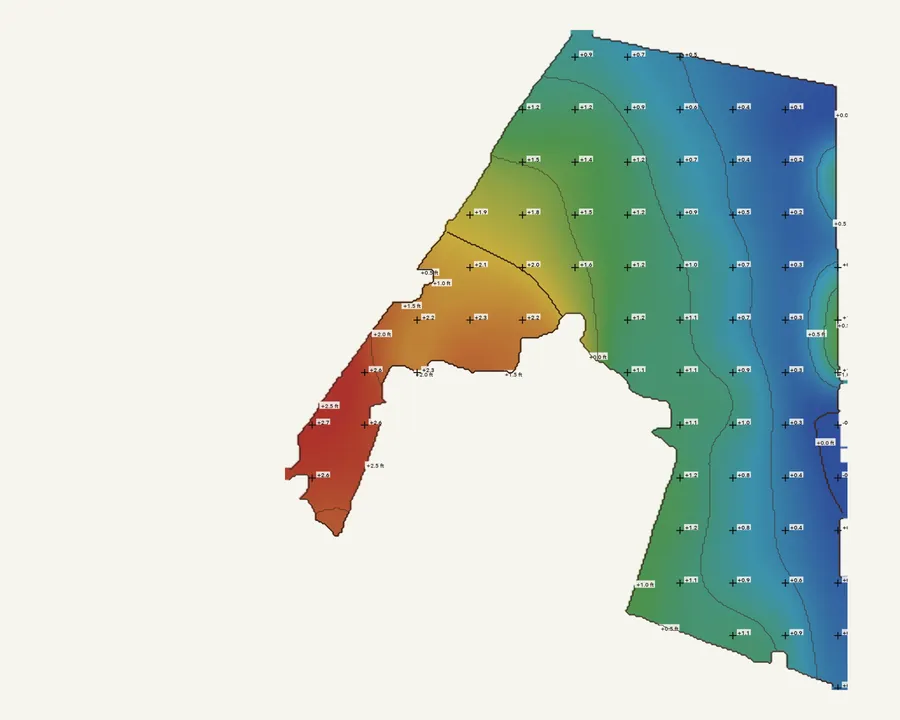
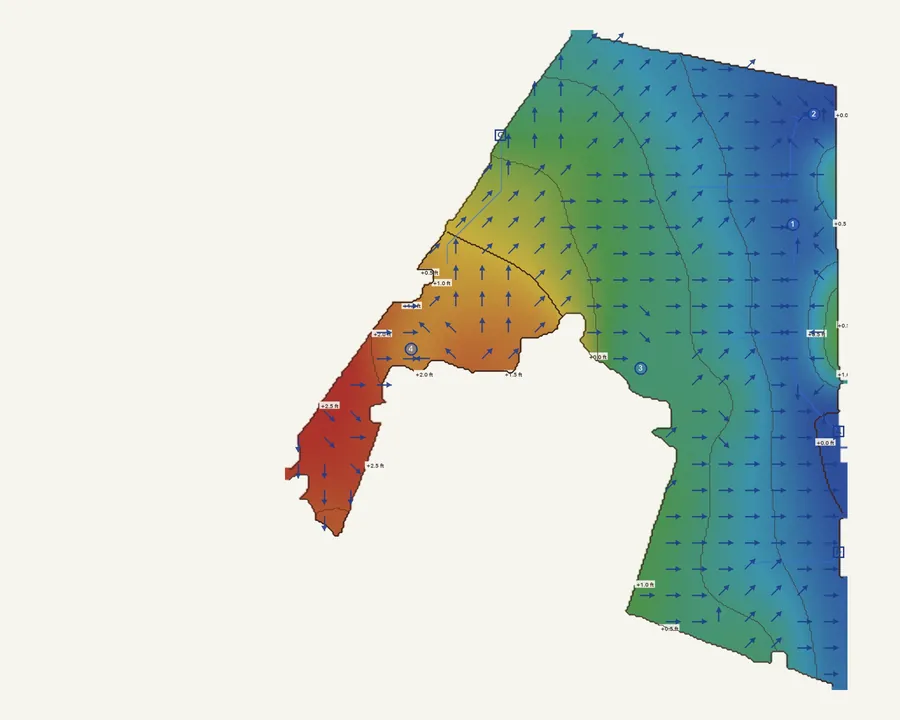
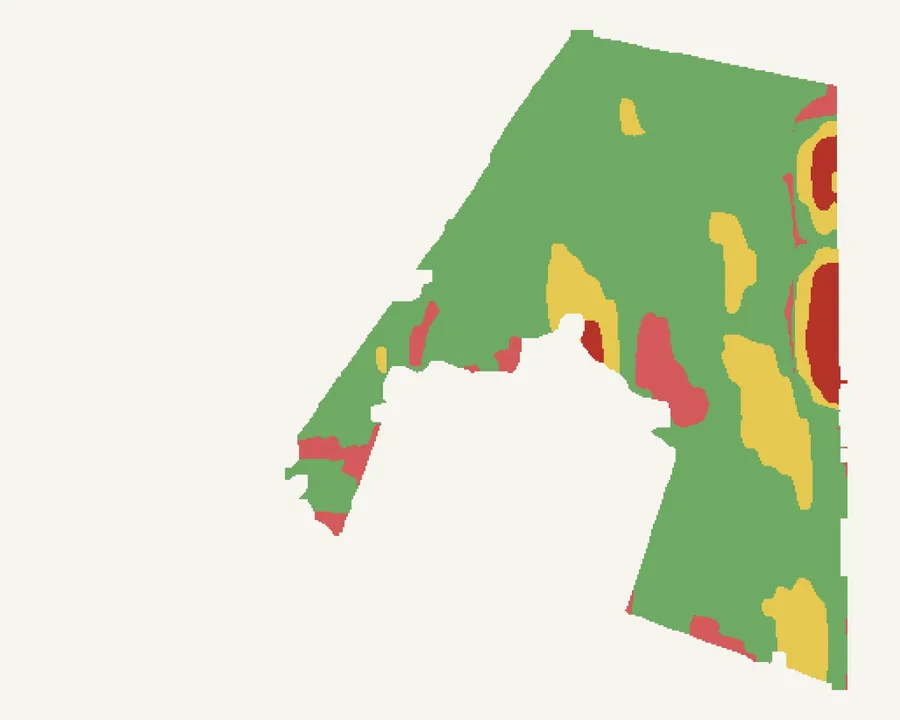
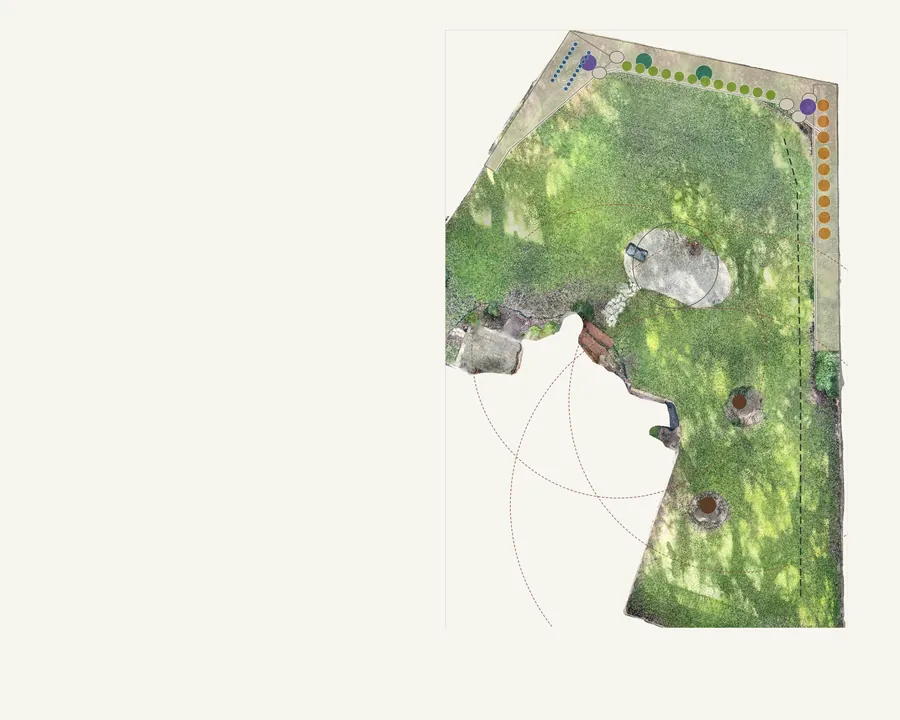
- 01Scan
- 02Stands
- 03Ground
- 04Contours
- 05Spot heights
- 06Water
- 07Slope
- 08Design map
 About 200 gal/hrAlamo Heights · one season onDrainage, bioswales & stormwaterChannels that take the storm and let the caliche drink, from one curb to municipal scale.Seen at L-4 · The Bioswale
Also kept
Lawns, beds and trees, kept with no synthetics.
- 07Native, edible & meadow plantingThe Hill Country palette planted to survive August; fruit trees and kitchen gardens; turf, or meadow in its place.Seen at L-2 · Old World Huerta
- 08Lawn care & turfLawns laid, kept and fed, with no synthetics.Ask about it · Sheet C
- 09Soil, compost & organic fertilizerThe long-term asset under everything else.Sheet S-2 · open
- 10Tree care & oak wilt preventionKeeping the canopy that shades the ground.Sheet S-1 · open
- 11Organic pest control: mosquito & fire antMosquitoes, fire ants and garden pests, with no synthetics, on any ground we keep.Ask about it · Sheet C
Final scope and price are set on site. Commissions from $10k. Every estimate is issued as a drawing set like this one, with a revision letter, so the number you hold is the number that was agreed.
What we build
The symbol, and what keeps it
- Prepared by
- NOONDesign ☉ Build ☉ Systems
- Issue
- 09.2026
- Studio
- San AntonioAustin · By commission anywhere
- Sheet
- B
Design ☉ Build ☉ SystemsSan AntonioAustinBy commission anywhereHablamos español